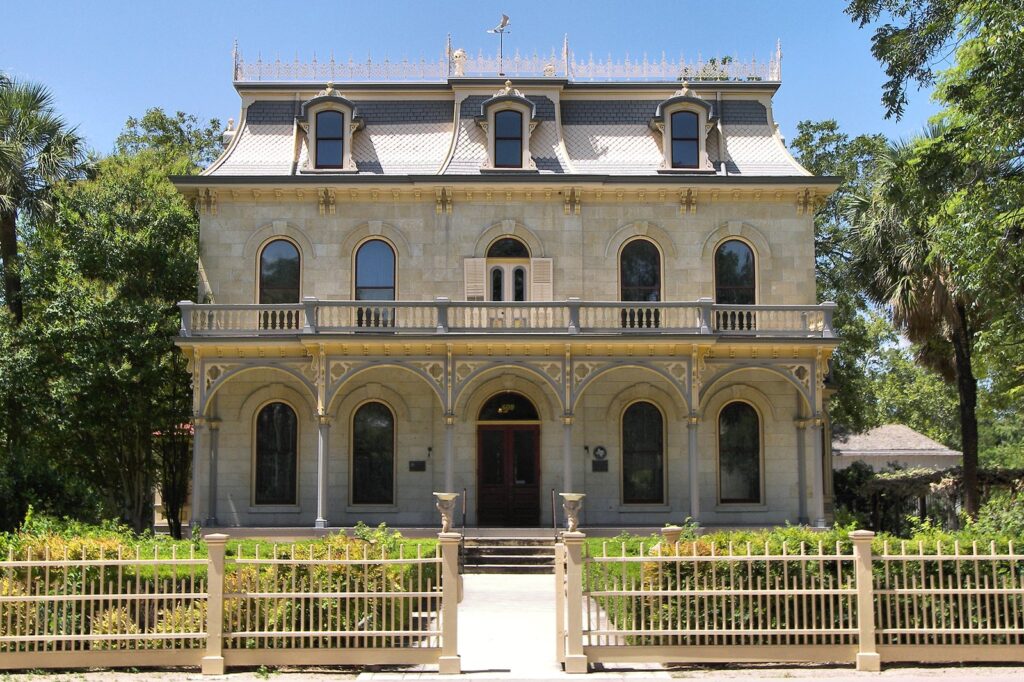
The San Antonio cultural districts worth a visitor’s time are the downtown core around Main Plaza and Market Square, where the Spanish colonial town began; La Villita and Hemisfair beside the river; King William and Southtown, the German-built neighborhood that became an arts district; the Westside, the heart of Mexican American and Tejano San Antonio; the East Side around St. Paul Square and the Carver, long the center of Black San Antonio; and the Mission Reach, where the story starts with the Indigenous peoples of the river and the Spanish missions. Most of the downtown districts are walkable in a day, and many of their best sights are free.
This guide is for travelers who want more than the Alamo and a boat ride: people who want to understand whose city this is and see it respectfully on foot. Two caveats. Several small historic sites close on Mondays, and the missions and San Fernando Cathedral are active places of worship, so time your visits around services. Summer heat, with average highs of 92 to 96°F from June through August, means walking tours belong in the morning. Hours, fees and history were checked on September 23, 2026 against the Texas Historical Commission, the National Park Service, the Texas State Historical Association and the sites themselves.
San Antonio’s Cultural Districts at a Glance
| District | The history it tells | Key stops | Cost | From the Alamo |
|---|---|---|---|---|
| Downtown core (Main Plaza, Military Plaza, Market Square) | Spanish colonial town, Canary Islander settlers, Tejano San Antonio | San Fernando Cathedral, Spanish Governor’s Palace, Casa Navarro, Market Square | Free to $5 | 13 to 19 minutes’ walk |
| La Villita and Hemisfair | An early riverside neighborhood; the 1968 world’s fair | La Villita shops, SAAACAM exhibit space, Yanaguana Garden | Free | 10 to 12 minutes’ walk |
| King William and Southtown | German immigrant San Antonio; today’s arts scene | King William Street, Steves Homestead, Blue Star Arts Complex | Free to wander | About 31 minutes’ walk |
| The Westside | Mexican American and Tejano San Antonio | Guadalupe Cultural Arts Center, Market Square’s edge, family restaurants | Free to wander | A short drive |
| The East Side | Black San Antonio; the railroad era | St. Paul Square, Sunset Station, the Carver | Free to wander; show tickets vary | A short drive or a long walk |
| Theater district | 1910s to 1940s movie palaces | Majestic, Empire, Aztec | Show tickets | A short walk |
| San Pedro Creek Culture Park | A downtown creek rebuilt as a park; new public art | Paseos and artworks along two miles | Free | A short walk west |
| Mission Reach | Coahuiltecan peoples and the Spanish missions | Four missions, Espada Aqueduct, World Heritage Center | Free | 7 to 17 minutes’ drive |
Walking times come from OpenStreetMap routes from Alamo Plaza. For everything else in the city, start with our guide to things to do in San Antonio.
A Short History of San Antonio, Told Through Places
San Antonio makes more sense once you know the order in which its peoples arrived and what each left behind. This isn’t a full history, just the dates behind the places you’ll walk past.
| When | What happened | Where you see it today |
|---|---|---|
| Thousands of years before 1700 | Indigenous bands live along the river and creeks. The Spanish later lumped hundreds of small, culturally diverse groups under the name Coahuiltecan. | The missions, where their descendants still worship; the park’s visitor center film |
| 1718 | Spain founds a mission and a presidio on the San Antonio River; the mission, San Antonio de Valero, later becomes known as the Alamo. | The Alamo |
| 1731 | Families from the Canary Islands, sent by the Spanish Crown, found the parish of San Fernando. | San Fernando Cathedral and Main Plaza |
| 1740s | Mission communities build irrigation works; the Espada Aqueduct dates from 1740 to 1745 and still carries water. | Espada Aqueduct |
| 1836 | The siege and battle of the Alamo; Tejanos serve as defenders, couriers and noncombatants. | The Alamo |
| 1840s onward | German immigrants settle south of downtown; the Tejano statesman José Antonio Navarro builds his home in the 1850s. | King William; Casa Navarro |
| 1877 to 1902 | The railroad arrives; Sunset Station opens in 1902, and the East Side grows around it. | St. Paul Square |
| 1914 to 1949 | Downtown’s movie palaces go up: the Empire, the Aztec, the Texas, the Majestic, the Alameda. | The theater district |
| 1918 | A community center for Black San Antonians opens on the East Side; it becomes the Carver. | Carver Community Cultural Center |
| 1939 | WPA construction of the River Walk begins. | The downtown River Walk |
| 1968 | HemisFair ’68, the world’s fair; King William is designated a city historic district the same year. | Hemisfair; King William |
| 2015 | The five missions are inscribed as a UNESCO World Heritage Site. | The missions and the Alamo |
Keep one distinction in mind throughout: San Antonio is full of stories, and not all of them are history. The Alamo in particular carries a century of legend. Where the record is solid, this guide says so; where it’s tradition, we say that instead.
The Downtown Core: Where the City Began
The district around Main Plaza, Military Plaza and Market Square, promoted as Zona Cultural, is the oldest part of the city. It’s compact: San Fernando Cathedral is 13 minutes’ walk from the Alamo, the Spanish Governor’s Palace 15 minutes and Market Square 19.
San Fernando Cathedral and Main Plaza
The parish of San Fernando was founded on March 9, 1731 by families from the Canary Islands sent by the Spanish Crown. The first stone church went up between 1738 and 1750, and its walls survive as today’s sanctuary, which is why the cathedral claims to be the oldest in Texas and the state’s oldest continuously functioning religious community. The Gothic Revival front you see today came much later. Main Plaza, officially Plaza de las Islas Canarias, is the square in front: fountains, shade and free events.
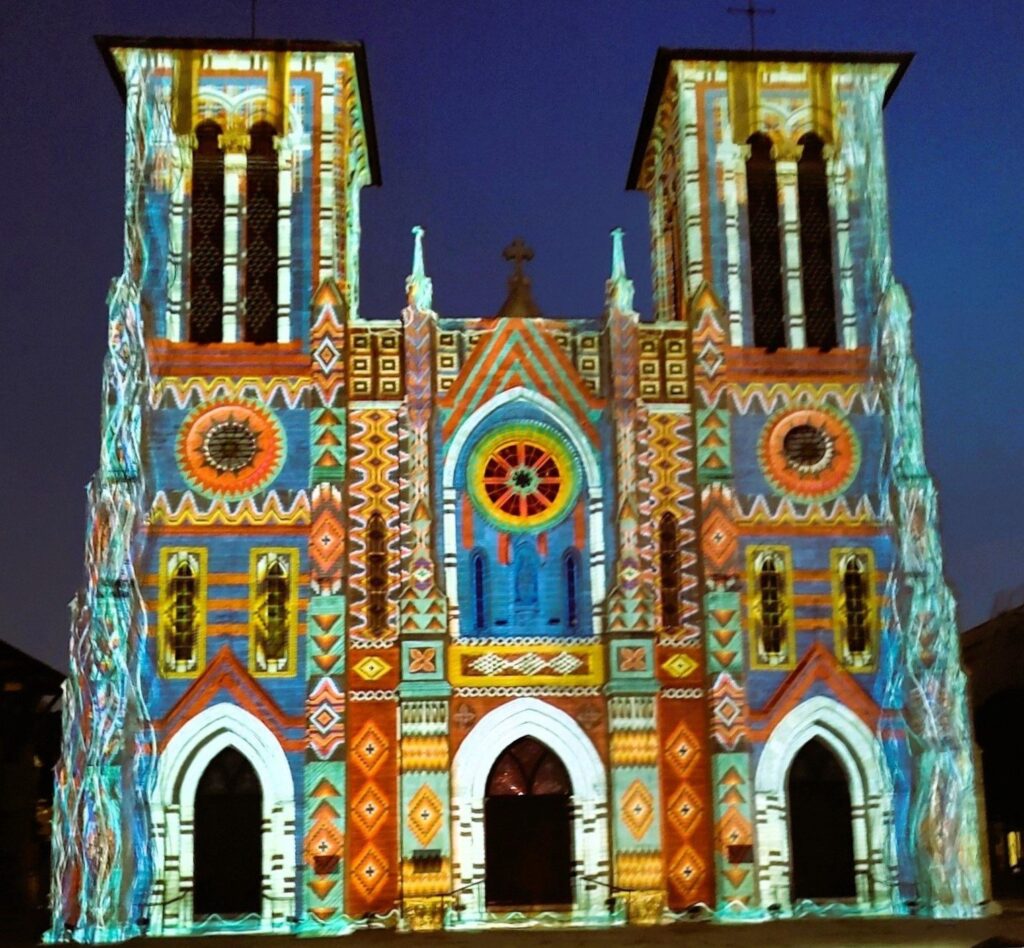
Plan it: the cathedral is an active parish, so visit quietly outside Mass. San Antonio | The Saga, a free 24-minute projection on the facade, runs Tuesday to Sunday at 9 p.m. A separate guide will cover the cathedral and Main Plaza in detail.
Spanish Governor’s Palace
Facing Military Plaza, the square with City Hall at its center, this thick-walled stone building from the Spanish colonial period is furnished as a period house museum. It’s small and takes half an hour.
Plan it: open Tuesday to Saturday 9 a.m. to 5 p.m. and Sunday 10 a.m. to 5 p.m.; closed Monday. Adults $5; seniors 60 and over, military and ages 7 to 13 $3; under 7 free.
Casa Navarro State Historic Site
José Antonio Navarro was a rancher, merchant, advocate for Tejano rights and one of only two native-born Texans to sign the Texas Declaration of Independence. His 1850s adobe and limestone home stands a few blocks west of Main Plaza in what was once Laredito, a thriving Tejano neighborhood now surrounded by the modern city. The Texas Historical Commission runs it, and it’s the best single place downtown to understand that Texas independence was also a Tejano story.
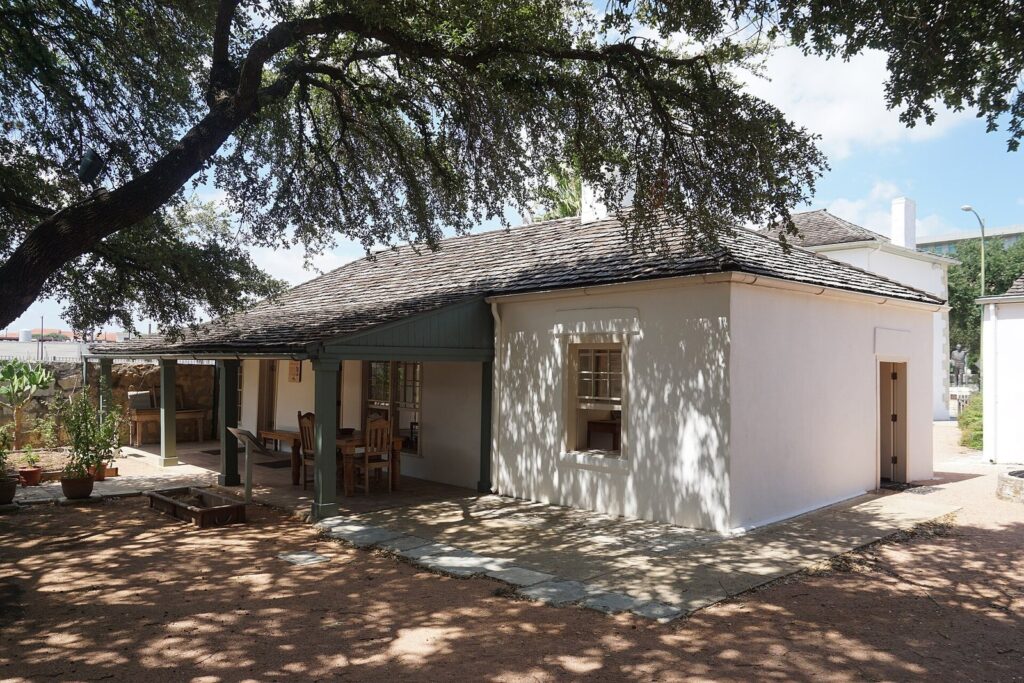
Plan it: 228 S. Laredo St. Open Tuesday to Sunday 10 a.m. to 4:30 p.m.; closed Monday. Adults $5; seniors, veterans, teachers and first responders $3; ages 6 to 17 $2; 5 and under free. Allow 45 minutes.
Historic Market Square
Market Square, known locally as El Mercado, is a block of shops, stalls and restaurants under strings of papel picado on the western edge of downtown. It’s open daily from 10 a.m. to 6 p.m. with no admission. It’s commercial and busy, and it’s also one of the places where San Antonio’s Mexican American culture is most visible to visitors, especially during festivals. The City’s free Centro de Artes Gallery, dedicated to Latino experiences in the United States, is on the square; confirm its hours before you go. A separate guide covers Market Square.
La Villita and Hemisfair
La Villita, a 10-minute walk from the Alamo, is a small riverside district of old stone and adobe houses now used as shops, studios and event spaces. It’s free to wander; shops open Monday to Saturday 10 a.m. to 6 p.m. and Sunday 11 a.m. to 4 p.m. The San Antonio African American Community Archive and Museum (SAAACAM) has exhibit space here, at 218 S. Presa St., Building 20; check its hours before you go.
Next door, Hemisfair was the site of HemisFair ’68, the world’s fair that also extended the River Walk to the new convention center. It’s now a free city park, with Yanaguana Garden’s playground and splash pads for families. Walk through it on the way to the Tower of the Americas, the fair’s most visible survivor.
King William and Southtown: German Mansions and an Arts District
King William, just south of downtown along the river, was settled by German immigrants and named for King Wilhelm I of Prussia. It was designated a city historic district in 1968 and joined the National Register of Historic Places in 1972. The Texas Commission on the Arts designated the King William Cultural Arts District in July 2011. The main draw is simply walking King William Street and its side streets, past limestone mansions, Victorian porches and big shade trees, about 31 minutes on foot from the Alamo or a pleasant walk south along the river.
The neighborhood is residential. Stay on the sidewalks, don’t wander into gardens for photos, and keep voices down in the evenings. The Steves Homestead is the best-known house; check its visiting hours before you go.
Southtown continues the story. The Blue Star Arts Complex, in former ice and cold-storage warehouses bought in 1985, holds the Contemporary at Blue Star, galleries and studios. On First Friday, the free monthly art walk from 6 p.m., the area fills with open studios; the remaining 2026 dates are October 2, November 6 and December 4. A separate guide will map a Southtown art walk.
Plan it: free to wander. Go in the early morning or the golden hour before sunset; in summer, avoid midday. Our San Antonio neighborhoods guide covers where to eat and stay in Southtown.
The Westside: Mexican American and Tejano San Antonio
West of downtown, the Westside has been the center of Mexican American life in San Antonio for generations. It’s a residential and working neighborhood, not a staged district, and the best way to experience it is through its cultural institutions and its restaurants.
- Guadalupe Cultural Arts Center: founded in 1980 to promote Chicano, Latino and Native American arts, and based in the 350-seat Guadalupe Theater, which opened in 1940 as the Westside’s grandest movie house and closed in 1970. Check its calendar for exhibitions, performances and festivals.
- Casa Navarro and Market Square: on the downtown edge of the Westside, and the natural place to start.
- Puffy tacos: a San Antonio original. Ray’s Drive Inn on SW 19th Street calls itself the home of the original puffy taco, and Henry’s Puffy Tacos, opened in 1978 by Ray’s brother, has locations on West Woodlawn Avenue and Bandera Road.
Visit as a guest: spend money at local businesses, ask before photographing people and homes, and don’t treat murals on private buildings as a backdrop without thinking about whose they are. A separate guide will put together a Latino culture itinerary, and our San Antonio food guide covers where to eat.
The East Side: Black San Antonio and the Railroad Era
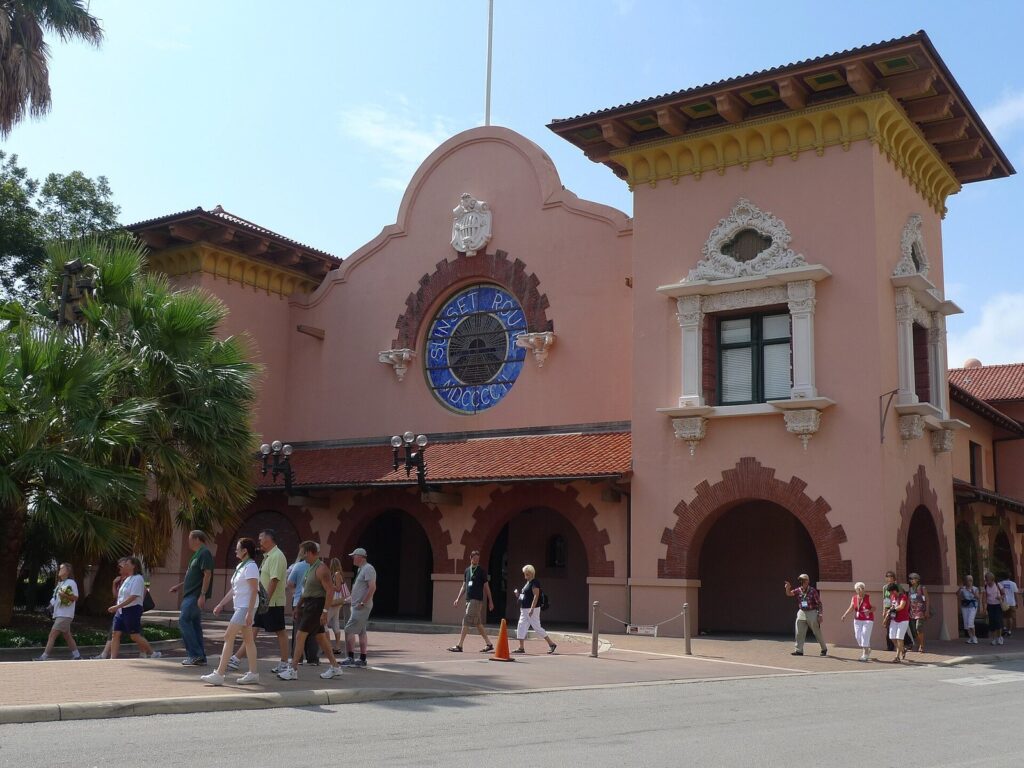
The East Side’s history is less visible to visitors than the missions or King William, and it’s worth seeking out. When the railroad arrived in 1877, the area around the tracks grew into a commercial district. Sunset Station, the Southern Pacific depot, opened in 1902 in the Spanish Mission style, and St. Paul Square around it became, in the early to mid-20th century, a commercial and entertainment hub for San Antonio’s Black community. Nearby Dignowity Hill, founded in the 1850s by the Czech physician Anthony Michael Dignowity, has Victorian and Craftsman homes.
Carver Community Cultural Center
The Carver’s history is San Antonio’s civil rights history in one building. It opened in 1918 as a community center for Black San Antonians, became the Colored Library by the 1930s and was renamed the Carver Library and Auditorium for George Washington Carver. From the 1940s through the civil rights era, Ella Fitzgerald, Duke Ellington, Count Basie and Louis Armstrong played there. After desegregation it fell into neglect, and in 1973, when the City moved to demolish it, community members physically blocked the bulldozers. The City renovated it and reopened it in 1977, and it still presents performances with an emphasis on African and African American heritage.
Plan it: check the Carver’s season calendar and see a show; that’s the best way in. Pair it with St. Paul Square.
Black history elsewhere in the city
- The Alamo: Joe, a man enslaved by William B. Travis, took part in the defense on March 6, 1836 and survived. His account became the basis of the traditional story of the battle.
- SAAACAM at La Villita: the San Antonio African American Community Archive and Museum’s exhibit space tells the story of Black San Antonians downtown.
A separate guide will map San Antonio’s Black history sites in more depth.
The Theater District: Movie Palaces of the 1910s to 1940s
Downtown San Antonio kept a remarkable run of early movie palaces. The Empire opened in 1914, the Aztec and the Texas in 1926, the Majestic in 1929 and the Alameda in 1949. The Majestic is the showpiece: designed by John Eberson in his atmospheric style, with a ceiling that suggests an open sky over a Spanish-style courtyard. It had more than 3,700 seats when it opened on June 14, 1929, making it the largest movie house in the South, and it’s billed as the first fully air-conditioned theater in Texas, a fact that meant a great deal in a San Antonio summer.
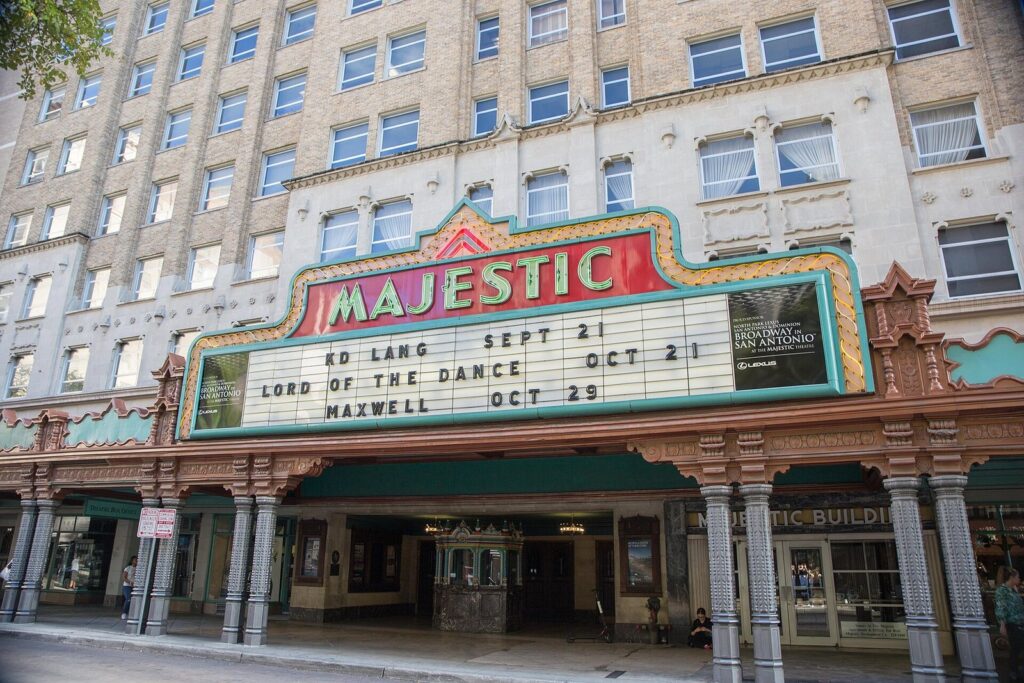
Plan it: the interiors are generally seen by buying a ticket to a show, so check what’s on at the Majestic and the Empire. The Guadalupe Theater on the Westside and the Carver on the East Side belong to the same story. A separate guide covers San Antonio’s historic theaters.
San Pedro Creek Culture Park: Public Art With a Story
San Pedro Creek runs through the west side of downtown, and it has been rebuilt as a linear park of just over two miles, with 12,793 linear feet of ADA-accessible paseos and permanent public art. Phase 1 opened in stages from May 2018 to October 2022, and later phases followed. It’s far less crowded than the River Walk, and the art gives the walk a thread to follow.
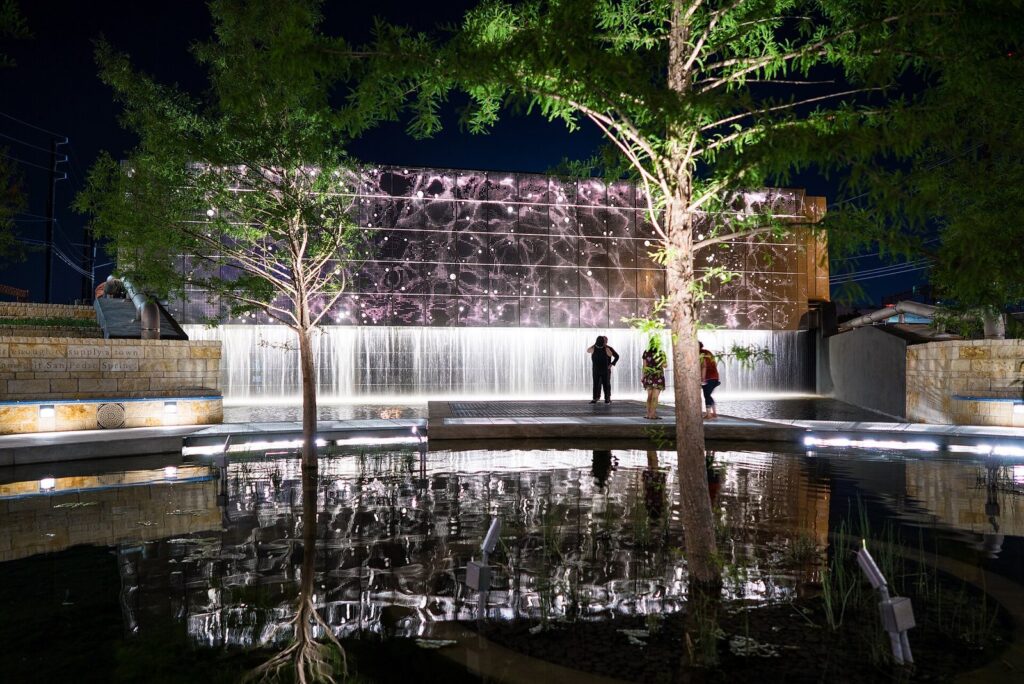
Plan it: free. Pair it with Ruby City, the free contemporary art center at 150 Camp St., open Thursday to Sunday. A separate guide will map the public art along the creek and elsewhere downtown.
The Mission Reach and the World Heritage Site
The four missions south of downtown, Concepción, San José, San Juan and Espada, are part of San Antonio Missions National Historical Park and, with the Alamo, make up a UNESCO World Heritage Site inscribed in 2015. They’re free to visit, with free parking, and they’re also active Catholic parishes.
The honest way to see them is as Indigenous places as much as Spanish ones. The National Park Service explains that “Coahuiltecan” is a name the Spanish gave to hundreds of small, culturally diverse bands who had lived in the region for thousands of years. The mission compounds were built and worked by those communities, under a colonial system that transformed their lives. Their descendants are still part of the parishes today.
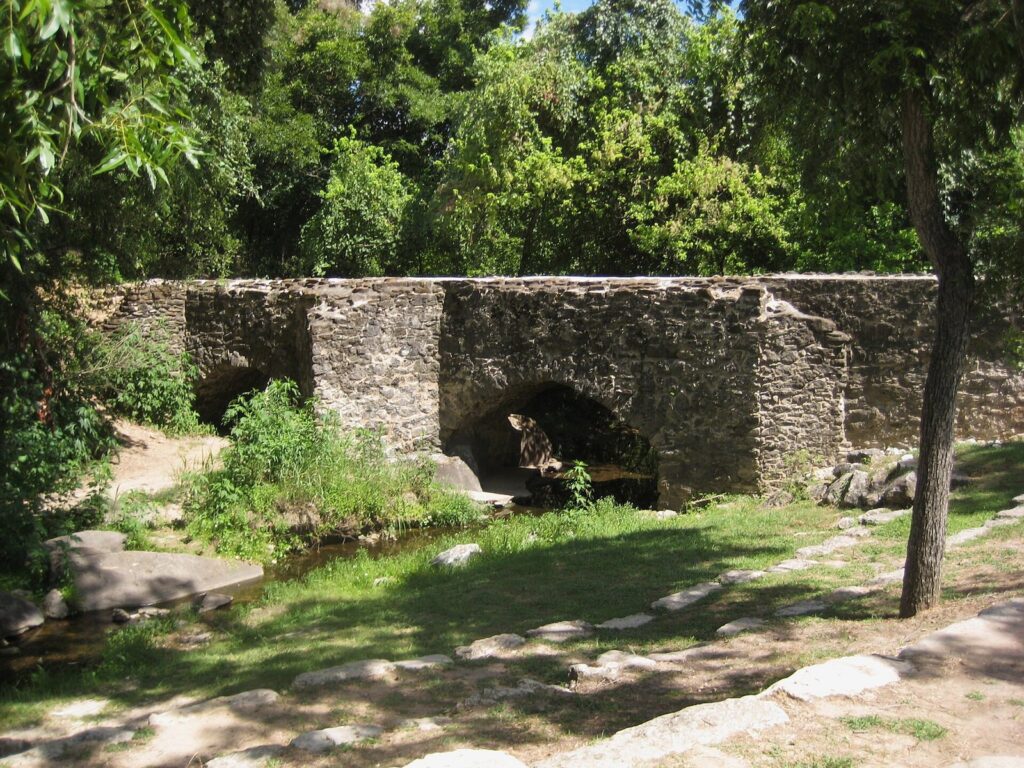
The Espada Aqueduct, built between 1740 and 1745 with two arches over Six-Mile (Piedras) Creek, is what the NPS calls the oldest Spanish aqueduct in the United States, and water still flows across it. The City’s World Heritage Center, at 3106 Roosevelt Ave. near Mission San José, is the City’s visitor hub for the World Heritage Site; check its hours before you go. Our guide to the San Antonio missions covers each one, and a separate guide will cover the World Heritage Center.
One more site belongs to the World Heritage listing: Rancho de las Cabras, the missions’ ranch near Floresville, about 23 miles from the park’s visitor center. It can only be visited on free monthly guided tours from October to March, lasting about two hours, reserved by emailing the park’s interpretation office at [email protected].
The Alamo: Documented History and Legend
The Alamo is San Antonio’s most famous site and its most mythologized. The documented outline: Santa Anna’s army reached Béxar on February 23, 1836, when the garrison numbered about 150. About 1,800 Mexican troops made the final assault around 5 a.m. on Sunday, March 6, and Mexican killed and wounded numbered about 600. Tejanos served as defenders, couriers and noncombatants, and most survivors of the final assault were Tejanos, though no exact count of Tejano defenders exists.
Much of the rest, including many of the most repeated speeches and gestures, comes from later retellings. Visiting well means holding both: the site’s real significance and a healthy skepticism about the stories told around it. Our complete Alamo guide covers tickets, construction and the exhibits.
Three Themed Routes Through San Antonio’s History
Tejano San Antonio
Start at Casa Navarro, the home of the Tejano signer of the Texas Declaration of Independence. Walk a few blocks east to San Fernando Cathedral, the parish the Canary Islanders founded in 1731, then on to the Alamo, where Tejanos served as defenders, couriers and noncombatants in 1836 and made up most of the survivors of the final assault. Finish at Market Square, and in the evening head to the Westside for a performance at the Guadalupe Cultural Arts Center if one is on.
German San Antonio
Walk south from downtown along the river to King William, named for King Wilhelm I of Prussia and settled by German immigrants, and spend an hour on its streets. Continue into Southtown for lunch. If you have a car and a spare morning, the story continues out of town: Castroville, 26 miles west, was planned in 1844 and settled largely by families from Alsace, and its Landmark Inn State Historic Site tells that story. New Braunfels and Fredericksburg, further out, were founded by German settlers in the 1840s. Our day trips from San Antonio guide covers all three.
Black San Antonio
Begin at the Alamo with the story of Joe, who was enslaved by William B. Travis, fought in the defense and survived to give the account on which the traditional story rests. Walk to La Villita for SAAACAM’s exhibit space, then drive or ride east to St. Paul Square and Sunset Station, the heart of Black commercial and entertainment life in the early to mid-20th century. End the day with a show at the Carver, the building the East Side saved from the bulldozers in 1973.
A Two-Hour Downtown History Walk
This loop links the core districts in the order the city grew. Start early in summer.
- The Alamo. Start at opening, 9 a.m., with a free timed ticket for the church.
- La Villita. About 10 minutes’ walk. Look in on SAAACAM’s exhibit space if it’s open.
- Main Plaza and San Fernando Cathedral. About 13 minutes from the Alamo by the direct route. Step inside quietly if there’s no service.
- Spanish Governor’s Palace. Behind City Hall on Military Plaza, a couple of minutes on. Closed Mondays.
- Casa Navarro. A few blocks west, on South Laredo Street. Closed Mondays.
- Market Square. Finish with lunch. It’s 19 minutes’ walk from the Alamo by the direct route, so the whole loop is easy to reverse.
Come back after dark for The Saga at 9 p.m., Tuesday to Sunday. For fuller multi-day plans, see our San Antonio itineraries.
Museums That Fill In the Story
Walking the districts shows you the places; a few museums explain the people.
- UTSA Institute of Texan Cultures: the peoples who made Texas, in its temporary home at 111 W. Houston St. since reopening on January 29, 2026. Open Thursday to Sunday, 10 a.m. to 4 p.m.; adults $10.
- Briscoe Western Art Museum: the West told through Native peoples, Tejanos and vaqueros, Spanish heritage and cowboys, in the city’s old public library on the River Walk.
- The Alamo Exhibit: more than 500 artifacts in the Ralston Family Collections Center, $15 for adults.
- Mission San José visitor center: a free 23-minute film, in English on the hour and in Spanish on the half hour, the best short introduction to the missions and their peoples.
Our guide to San Antonio museums has hours, prices and free days for each.
Festivals Where the City’s Cultures Show Up
San Antonio’s calendar is one of the best ways to see its communities on their own terms. Fiesta San Antonio 2027 runs April 15 to 25, with parades and events across the city, some free and some ticketed. In late October, Muertos Fest fills Hemisfair from October 23 to 25, 2026, free, as Día de los Muertos altars and catrinas appear across town. DiwaliSA lights up the Arneson River Theatre and Hemisfair on Saturday, November 7, 2026, and Luminaria takes over Houston Street with free art on Saturday, November 14. First Friday at Blue Star happens every month. Our San Antonio events calendar has the full list.
Visiting Respectfully
- Places of worship: the missions and San Fernando Cathedral hold services. Dress modestly, keep quiet and don’t photograph people at prayer.
- Residential districts: King William, Dignowity Hill and the Westside are neighborhoods where people live. Stay on public sidewalks.
- Whose history: San Antonio’s story belongs to Coahuiltecan, Spanish, Mexican, Tejano, German, Black and many other communities. The best sites tell more than one side; notice which ones don’t.
- Spend locally: buying lunch and crafts from family businesses on the Westside and at Market Square supports the culture you came to see.
Getting Around and Accessibility
The downtown districts are walkable, and San Pedro Creek Culture Park was built with ADA-accessible paseos. The River Walk has stairs-only access points, so use the City’s River Walk ADA maps. Historic buildings like Casa Navarro and the Spanish Governor’s Palace are old structures, so call ahead about steps and thresholds. At the missions, the Espada Aqueduct viewing area is nearly level, while the path at Espada Dam slopes steeply. For VIA routes to the missions and the East Side, parking and walking times, see our guide to getting around San Antonio.
San Antonio Culture and History FAQ
What are San Antonio’s main cultural districts?
For visitors, the core ones are the downtown historic district around Main Plaza and Market Square, La Villita and Hemisfair, King William and Southtown, the Westside, the East Side around St. Paul Square, the theater district and the Mission Reach. The Texas Commission on the Arts has designated cultural arts districts including King William, and the City also maintains a long list of historic districts.
Is Casa Navarro worth visiting?
Yes, especially if your picture of Texas independence begins and ends with the Alamo. José Antonio Navarro, a Tejano, was one of only two native-born Texans to sign the Texas Declaration of Independence, and his 1850s home tells that story. Tickets cost $5 for adults, and it’s open Tuesday to Sunday.
Where can I learn about Black history in San Antonio?
Start with the Carver Community Cultural Center on the East Side, whose building dates to 1918 and which community members saved from demolition in 1973. Walk St. Paul Square around the 1902 Sunset Station, visit SAAACAM’s exhibit space at La Villita, and at the Alamo, learn about Joe, the enslaved man who survived the battle.
How old is San Antonio?
Spain founded the mission and presidio that grew into the city in 1718, and the Canary Islanders founded the civil settlement and the parish of San Fernando in 1731. Indigenous peoples had lived along the river for thousands of years before either.
Can you tour King William’s historic homes?
You can walk the district freely, and most homes are private residences, viewed from the sidewalk. The Steves Homestead is the best-known of the grand houses; check its hours before planning around it. Several of the neighborhood’s historic houses operate as bed and breakfasts if you want to stay inside one.
What’s the best time of day for a history walk?
Early morning, especially from May to September, when highs regularly top 90°F. Start at the Alamo at 9 a.m., finish at Market Square for lunch, and come back to Main Plaza at 9 p.m. for The Saga once it’s cooler.
Related San Antonio Guides
- San Antonio Missions: the four missions and the World Heritage Site.
- The Alamo: tickets, exhibits and the history.
- San Antonio Museums: history museums, from the Institute of Texan Cultures to the Witte.
- San Antonio Neighborhoods: where each district fits in the city.
- San Antonio Events: festivals where the city’s cultures are most visible.
Sources and How We Checked
Hours, fees and historical details in this guide were checked on September 23, 2026. The guide is compiled from the agencies, historians and institutions listed below rather than from other travel lists, and it does not claim first-hand visits.
- Texas Historical Commission: Casa Navarro State Historic Site
- National Park Service: San Antonio Missions National Historical Park, Espada Aqueduct
- Texas State Historical Association Handbook of Texas: San Fernando Cathedral, Majestic Theatre, battle of the Alamo entries
- San Fernando Cathedral: history; Main Plaza: The Saga
- Carver Community Cultural Center: history and mission
- King William Association: historic districts; King William Cultural Arts District: about
- City of San Antonio: World Heritage Center, Market Square and Centro de Artes; San Pedro Creek Culture Park
- Spanish Governor’s Palace: hours and admission; La Villita: hours; SAAACAM: contact and hours
- Blue Star Arts Complex: First Friday; Ray’s Drive Inn: history
- The Alamo: visit information; San Antonio River Walk: history
- NOAA National Centers for Environmental Information: 1991 to 2020 climate normals
San Antonio Tourism Guide is an independent publication. We are not affiliated with Visit San Antonio, the City of San Antonio, the Alamo or any attraction listed here, and no one paid to be included.
Photo Credits
- Steves Homestead, King William: photo by Larry D. Moore, Wikimedia Commons (CC BY 4.0)
- The Saga on San Fernando Cathedral: photo by Michaelluckey, Wikimedia Commons (CC BY 4.0)
- Casa Navarro State Historic Site: photo by Michael Barera, Wikimedia Commons (CC BY-SA 4.0)
- Sunset Station: photo by Tony Kent, Wikimedia Commons (CC BY-SA 2.0)
- Majestic Theatre: photo by Renelibrary, Wikimedia Commons (CC BY-SA 4.0)
- San Pedro Creek Culture Park: photo by Nan Palmero from San Antonio, TX, USA, Wikimedia Commons (CC BY 2.0)
- Espada Aqueduct: photo by Liveon001 ©Travis Witt, Wikimedia Commons (CC BY-SA 3.0)