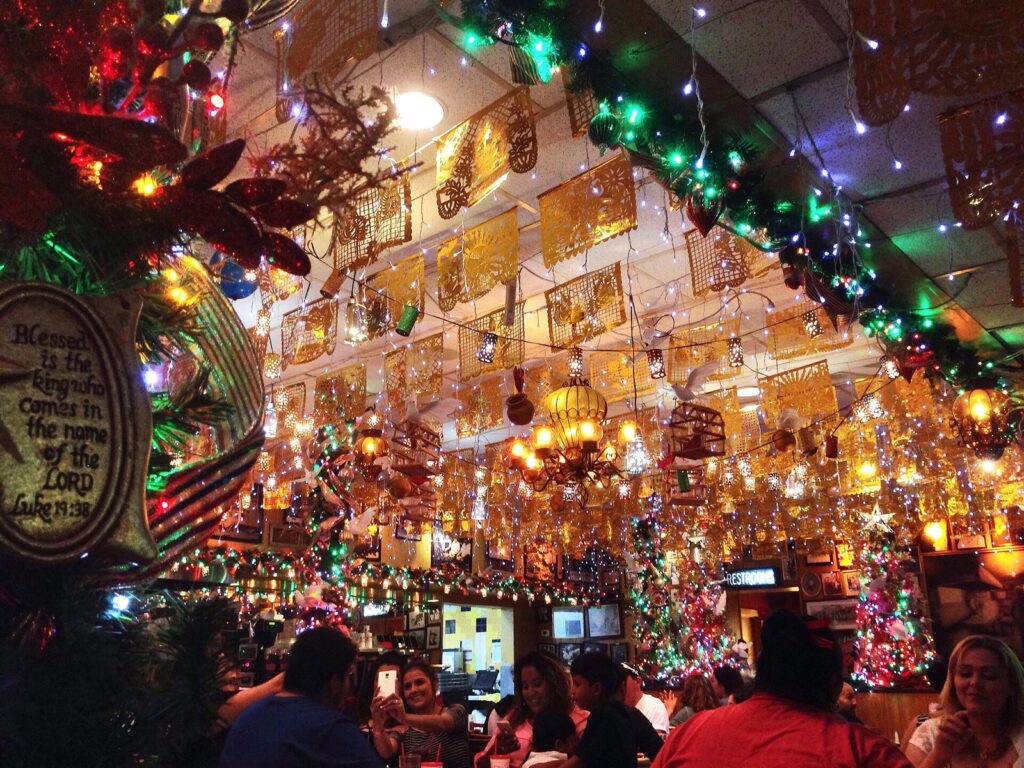
San Antonio food is Tex-Mex and Mexican cooking first, Texas barbecue second, and a small but serious chef scene third. The dishes to know are the puffy taco, a fried masa shell that puffs up in hot oil and was popularized here; the breakfast taco, eaten on flour tortillas all over town every morning; enchilada and combination plates under chili gravy; Sunday barbacoa; pan dulce from the panaderías; and slow-smoked brisket. For a visitor, the easiest places to eat well are Market Square, the Pearl and the neighborhood taquerías a short drive from downtown. The River Walk is for atmosphere more than value. In 2017 San Antonio became a UNESCO Creative City of Gastronomy, and the best known of its three Michelin-starred restaurants, Mixtli, cooks its way through the regions of Mexico.
This guide is for visitors who want to eat like the city rather than like the convention crowd, without spending the trip in a car. It connects food to the places you’ll already be, explains what to order, and flags when to go and what needs booking. The caveats: many taquerías keep morning-and-lunch hours only, barbecue joints can sell out of brisket, and summer patio dining means sitting out in 90°F evenings. Details were checked September 23, 2026 against the restaurants’ own sites, the Michelin Guide, the City of San Antonio and the other sources listed at the end. We don’t quote menu prices, because they change often; the tiers below give you the shape of the bill.
| Where to eat | What to eat there | Spend | Time needed | Outdoors? | Book ahead? |
|---|---|---|---|---|---|
| Market Square | Tex-Mex plates, pan dulce, a margarita | $$ | 60 to 90 minutes | Indoor and outdoor | No |
| The Pearl | Saturday farmers market, chef-driven restaurants, a market hall | $$ to $$$ | 2 hours | Mixed | For dinner at the popular restaurants |
| River Walk restaurants | Tex-Mex, chips and salsa, drinks on the water | $$ to $$$, with a setting premium | 60 to 90 minutes | Mostly patios | Weekend evenings and big groups |
| Neighborhood taquerías | Breakfast tacos, puffy tacos, barbacoa | $ | 30 minutes | Varies | No |
| Barbecue joints | Brisket, ribs, sausage, beans | $$ | 1 hour, plus any line | Varies | No; go early |
| Mixtli | A seasonal tasting menu from one region of Mexico | $$$$ | Most of an evening | Indoors | Yes, well ahead |
What should you eat in San Antonio?
Start with the dishes, then worry about where. These are the ones the city does best.
Tex-Mex plates
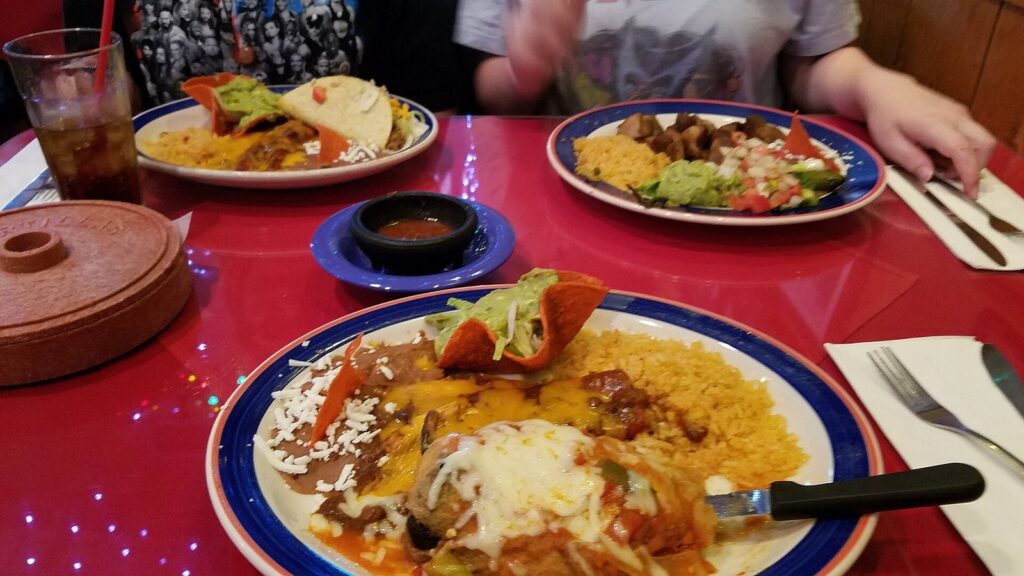
Tex-Mex is the food that grew up in Texas from Tejano and Mexican home cooking: enchiladas under a brick-red chili gravy, crispy and soft tacos, rice and refried beans on the side, flour tortillas, melted yellow cheese and a basket of chips before anything else arrives. The combination plate, a little of everything on one hot platter, is the classic order. It’s comfort food rather than refined food, and San Antonio has been serving it for well over a century. If a menu offers “chili con carne” as a topping or a bowl, that’s the same deep-red, cumin-heavy sauce that sold on the city’s plazas in the 1800s.
Puffy tacos
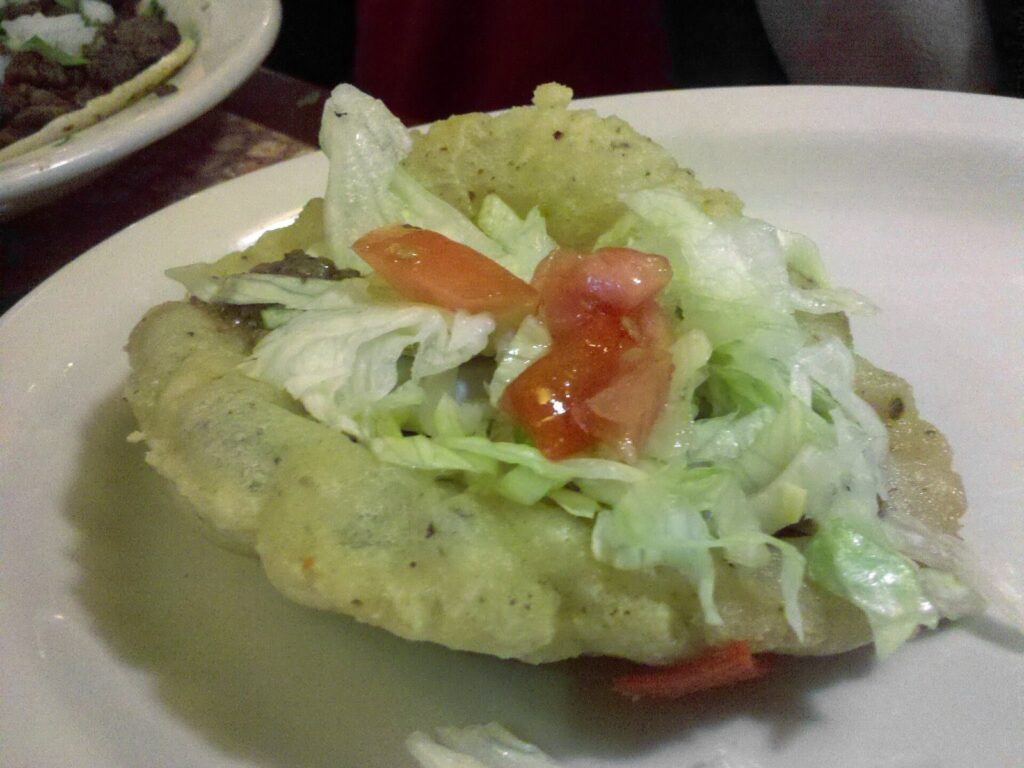
The city’s signature taco starts as a disk of fresh masa dropped into hot oil, where it puffs into a light, crackly shell that’s soft on the inside. It’s usually filled with seasoned ground beef or chicken, lettuce and tomato, and eaten fast before it shatters. Ray’s Drive Inn, at 822 SW 19th Street on the West Side, calls itself the home of the original puffy taco. Henry’s Puffy Tacos was opened in 1978 by Ray’s brother and has two locations, at 3202 W. Woodlawn Avenue and 6030 Bandera Road. The sibling rivalry is part of the fun. Order one of each filling; they’re cheap enough to experiment.
Breakfast tacos
In San Antonio, breakfast is a taco. The standard is a warm flour tortilla wrapped around eggs with potato, chorizo, bacon, or refried beans and cheese, with red or green salsa on the side. Every neighborhood has its taquería, many open early and close by mid-afternoon, and ordering at the counter is normal. Two or three tacos make a meal. A separate guide will name the best of them; for now, the rule is simple: if the line is mostly people in work boots and school uniforms, you’re in the right place.
Barbacoa, menudo and weekend breakfasts
Barbacoa here means slow-cooked beef, traditionally from the cow’s head, sold by the pound on weekend mornings and eaten in tortillas with onion, cilantro and salsa. Sunday barbacoa is a family ritual in many San Antonio homes, and plenty of taquerías and panaderías sell it only on weekends until it runs out. Menudo, a tripe and hominy soup, is the other weekend classic, with a reputation as a hangover cure. Neither is fancy. Both are worth seeking out.
Pan dulce and the panaderías
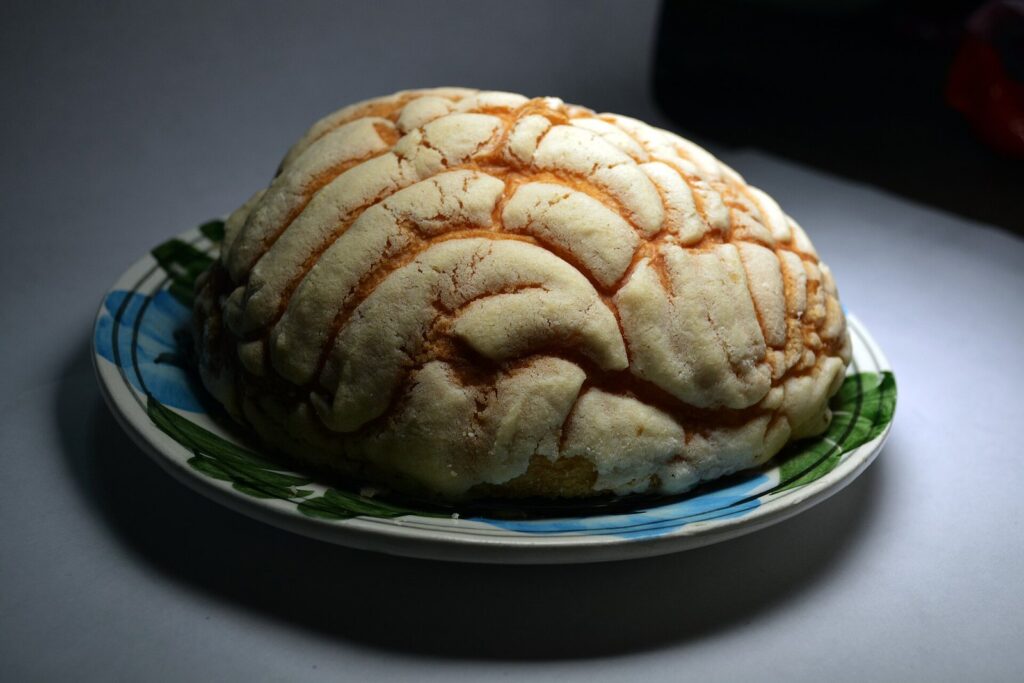
Mexican bakeries, panaderías, sell pan dulce: conchas with their shell-patterned sugar tops, pig-shaped ginger cookies called marranitos, turnovers called empanadas, and dozens of other sweet breads. The routine is to take a tray and tongs, pick what you want from the cases, and pay by the piece. Mi Tierra, at Market Square, is a café y panadería, with a bakery counter by the door, and it’s the easiest place to try pan dulce on a sightseeing day. It opens at 8 a.m. daily.
Texas barbecue
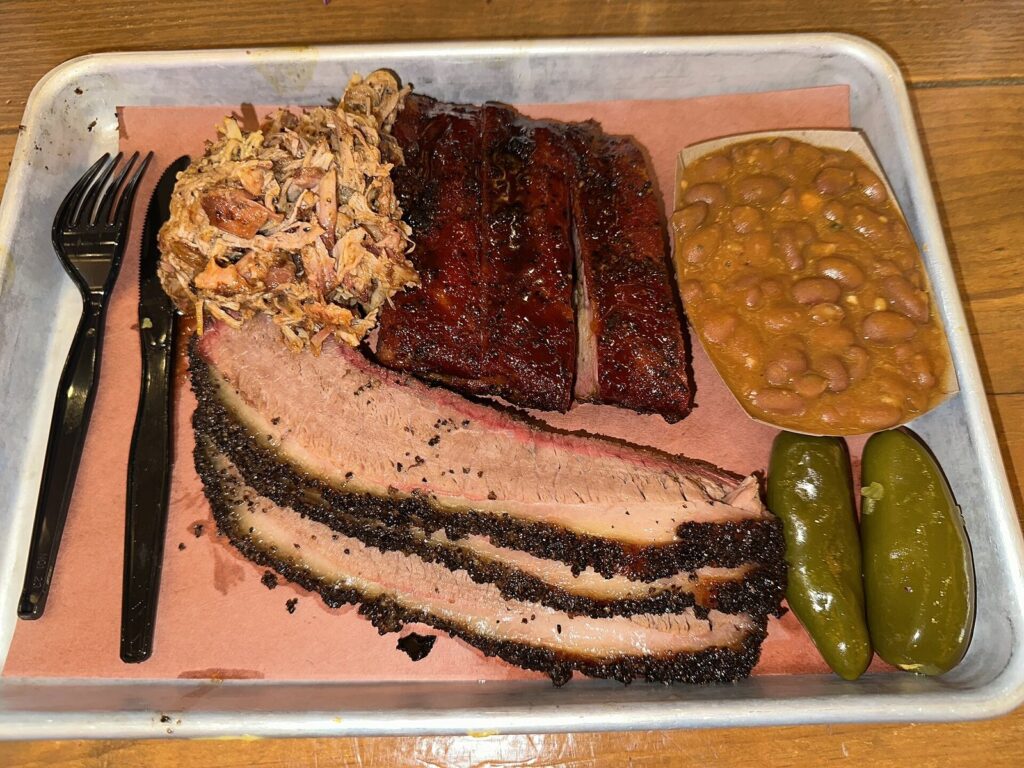
Central Texas barbecue means beef brisket smoked for hours over wood, sold by weight on butcher paper, with sausage, ribs and simple sides. San Antonio’s best barbecue adds a South Texas accent: tortillas instead of white bread, beans with a kick, and salsas beside the sauce. Two names that come up again and again: 2M Smokehouse, opened in 2016 by pitmaster Esaul Ramos Jr. and listed in the Michelin Guide, and Reese Bros Barbecue, opened in 2022 by brothers Nick and Elliott Reese. Both are a drive from downtown. Go at lunch and go early, because popular barbecue joints can sell out of their best cuts.
Cold things for hot days
From May to September you’ll want something cold every afternoon. Look for raspas (shaved ice with syrup), mangonadas (mango, chamoy and chile), aguas frescas like horchata and jamaica, and paletas, Mexican ice pops. Market Square and the Pearl are easy places to find them on a sightseeing day.
Margaritas, micheladas and Big Red
The margarita is the default drink with Tex-Mex, frozen or on the rocks, and every River Walk patio will sell you a large one. A michelada, beer with lime, spices and sometimes tomato juice over ice, is the better choice on a hot afternoon. Mexican Coke, made with cane sugar and sold in glass bottles, is common at taquerías. And if you see someone drinking a bright red soda with their weekend barbacoa, that’s Big Red, a Texas cream soda that has been the traditional pairing for generations. It tastes like bubble gum. Try it once.
How do you order at a taquería?
Most taquerías and panaderías are counter-service and fast, with menus in Spanish, English or both. Order at the counter, say “flour” or “corn” for your tortillas, and grab salsa from the bar if there is one. “Con todo” means with everything. Breakfast tacos are usually sold individually, so order two or three. The words below cover most menus.
| On the menu | What it is |
|---|---|
| Papas con huevo | Potato and egg, the classic breakfast taco |
| Chorizo con huevo | Spicy pork sausage scrambled with egg |
| Frijoles con queso | Refried beans and cheese, the vegetarian standby |
| Carne guisada | Beef stewed in a thick, peppery gravy |
| Barbacoa | Slow-cooked beef, sold on weekend mornings |
| Chicharrón | Pork skin, crisp or simmered in salsa |
| Nopalitos | Tender strips of prickly-pear cactus |
| Fideo | Thin noodles toasted and simmered in a tomato broth |
| Al pastor | Marinated pork, often cooked on a vertical spit |
| Carne asada | Grilled, chopped beef |
| Horchata and jamaica | Aguas frescas: a sweet rice drink and a hibiscus drink |
| Raspa | Shaved ice with fruit syrup |
| Concha, marranito, empanada | Pan dulce: a sugar-topped bun, a pig-shaped ginger cookie and a filled turnover |
Where should you eat near the sights?
You’ll eat better if you plan meals around where you’ll already be. This is the visitor’s food route, from downtown outward. Times are free-flow OpenStreetMap routing from Alamo Plaza.
| Area | From the Alamo | Eat here for | Best time |
|---|---|---|---|
| River Walk and Alamo Plaza | 0 to 10 minutes on foot | Atmosphere, drinks, easy Tex-Mex | Weekday lunch, or drinks at dusk |
| Market Square | 19 minutes on foot, 4 by car | Tex-Mex plates, pan dulce | Late breakfast or lunch |
| The Pearl | 33 minutes on foot, 4 by car | Chef restaurants, the farmers market, a market hall | Saturday morning, or dinner |
| King William and Southtown | 31 minutes on foot, 4 by car | Breakfast, galleries and bars | Weekend brunch, First Friday |
| Brackenridge Park | 6 minutes by car | A garden café | Morning |
| West Side | A short drive | Puffy tacos, taquerías | Lunch |
Around the Alamo and the River Walk
Downtown’s food is convenient more than special, with two exceptions worth knowing. Casa Rio, which opened in 1946 as the first restaurant on the River Walk, still serves Tex-Mex under its famous colored umbrellas, and it’s the right choice if you want one meal on the water with some history attached. The Buckhorn Saloon & Museum, a few blocks from the Alamo, lets you into its saloon and café free; you only pay for the museum. At the Tower of the Americas, the Chart House revolving restaurant sells you dinner with the city turning slowly below.
For everything else on the river, read the next section before you sit down. Our River Walk guide covers which stretches are worth an evening walk after you eat, and our Alamo visitor guide has the morning timing that leaves you hungry at the right hour.
Market Square
Historic Market Square, 19 minutes’ walk west of the Alamo, is open 10 a.m. to 6 p.m. daily with no admission, and until 7 p.m. on Fridays and Saturdays in June and July. It’s part market, part plaza, and part food stop, with Mi Tierra Café y Panadería as its anchor. Mi Tierra is no longer open 24 hours, as it was for decades; it opens at 8 a.m. every day, and its own site lists conflicting closing times, so don’t plan on a 2 a.m. enchilada. Come for a late breakfast or lunch, eat a Tex-Mex plate under the lights, and leave with a bag of pan dulce.
The Pearl
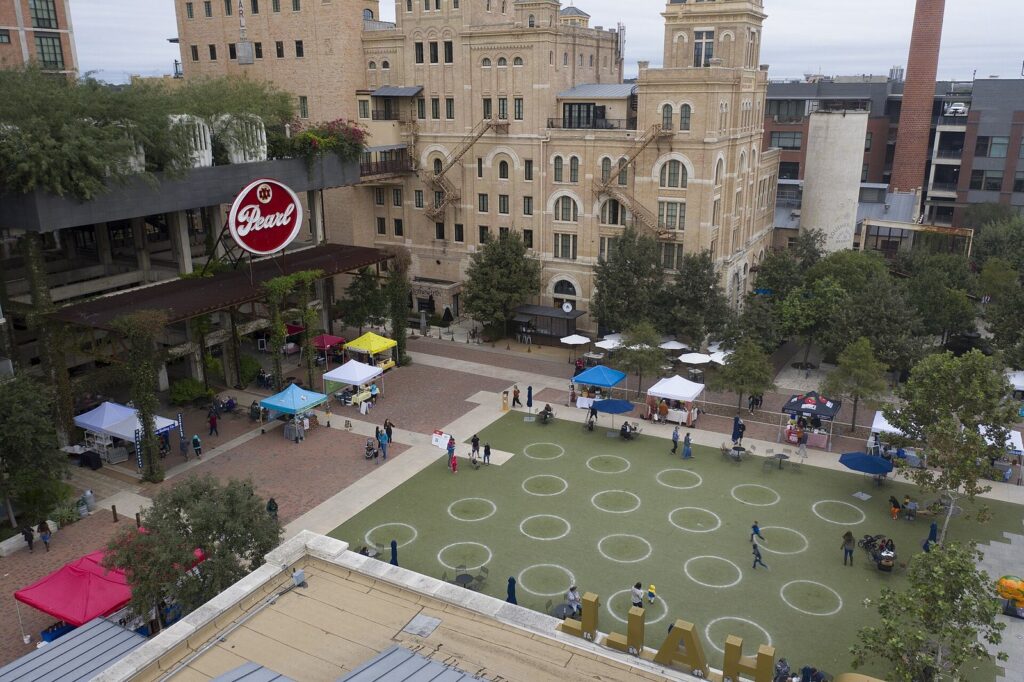
The Pearl is the city’s densest collection of good restaurants, built into a brewery where brewing began in 1883 and now home to a campus of the Culinary Institute of America. The Saturday farmers market runs 9 a.m. to 1 p.m., rain or shine, and between September 16 and November 25, 2026 there’s a Wednesday night market from 5 to 9 p.m. Pullman Market is a 40,000-square-foot market hall with several restaurant concepts, a butcher and a fishmonger under one roof.
Among the Pearl’s restaurants, Southerleigh Fine Food & Brewery and Ladino both earned Bib Gourmand listings, Michelin’s nod to good cooking at moderate prices, in the Texas guide, and Isidore in the Pullman Market earned a Michelin star in October 2025. La Gloria, from chef Johnny Hernández, serves Mexican street food; Supper is Hotel Emma’s restaurant; and Bakery Lorraine handles pastries and coffee. Restaurants here change more often than downtown, so check the Pearl’s own dining directory before you set your heart on one.
Plan it: surface parking is free on weekdays before 3 p.m., then $4 flat Monday to Thursday and $13 from 3 p.m. Friday and all weekend, with the first 30 minutes free; book dinner at the popular restaurants on weekends; the Museum Reach walk from downtown is 1.3 miles from Lexington Avenue.
King William and Southtown
South of downtown, the Guenther House restaurant, in the historic King William district, serves breakfast and lunch Wednesday to Sunday from 8 a.m. to 2 p.m. Southtown’s galleries, cafés and bars are at their busiest on First Friday, the free monthly art walk that starts at 6 p.m. at the Blue Star Arts Complex; the remaining 2026 dates are October 2, November 6 and December 4.
Brackenridge Park
Inside the Japanese Tea Garden, Jingu House serves a café menu Monday to Thursday 10 a.m. to 4 p.m., Friday 10 a.m. to 5 p.m. and weekends 9 a.m. to 5 p.m. It’s walk-in only, and it’s the most pleasant place in the city for a late breakfast after a garden walk.
The West Side and beyond
West of downtown, the city’s Mexican-American heart is where the puffy taco lives, at Ray’s Drive Inn and at Henry’s location on W. Woodlawn Avenue. It’s a short drive, not a walk, and a better lunch than most of what’s on the river, for less. For barbecue, 2M Smokehouse and Reese Bros Barbecue are also drives from downtown; pair them with a missions morning or a day trip.
Is it worth eating on the River Walk?
For the setting, yes, once. For the food and the value, usually no. The restaurants on the downtown loop sell location: a table by the water, boats sliding past, mariachis on a good night. You pay for that in price and, on weekend evenings, in waits and noise. The food is mostly familiar Tex-Mex and American standards.
The smart ways to do it:
- Go at lunch or on a weekday. Same view, shorter waits, calmer patio.
- Do drinks and chips on the river, dinner elsewhere. A margarita at dusk on the water, then a short ride to the Pearl or Market Square for a better meal.
- Pick a place with history. Casa Rio has been on the river since 1946, and that counts for something.
- Check access before you go. Many river-level restaurants are reached by stairs from the street. If you use a wheelchair or a stroller, ask the restaurant which entrance has an elevator, and check the City’s River Walk accessibility maps.
- Mind the heat. From June to September, a patio at 7 p.m. is still in the 90s. Ask for an inside table if the shade is gone.
What does a day of eating in San Antonio look like?
If food is the point of your trip, build a day around it. This route works Tuesday to Sunday and keeps you indoors during the worst of the heat.
| Time | Where | What to eat | Getting there |
|---|---|---|---|
| 8:00 a.m. | Mi Tierra at Market Square, or a neighborhood taquería | Breakfast tacos, or pan dulce and coffee | Market Square is 19 minutes on foot from the Alamo |
| 9:00 a.m. | The Alamo and the River Walk | Nothing; walk it off | Walk |
| 12:00 p.m. | The West Side | Puffy tacos at Ray’s Drive Inn or Henry’s | A short drive |
| 2:00 p.m. | A museum, then something cold | A raspa, a paleta or an agua fresca | Short drive or walk |
| 6:30 p.m. | The Pearl | Dinner at one of its restaurants, or a market-hall crawl at Pullman Market | 4 minutes by car from downtown |
| 9:00 p.m. | The River Walk | A margarita or a michelada on the water | A short ride back downtown |
The weekend version: on Saturday, start at the Pearl’s farmers market at 9 a.m., then drive to one of the barbecue spots for an early lunch before the best cuts sell out. On Sunday, do what San Antonio does: barbacoa in the morning, with tortillas and a Big Red.
The no-car version: Mi Tierra for breakfast, a River Walk lunch at Casa Rio, the Museum Reach walk to the Pearl in the early evening (1.3 miles from Lexington Avenue), dinner at the Pearl, and a rideshare back. You’ll miss the puffy tacos and the barbecue, so plan them for a day with a car.
How much does eating out cost?
San Antonio is an easy city to eat well in on a budget, and the spread is wide. Without quoting prices that change weekly, here’s the shape of it:
- $: taquerías, puffy taco joints and panaderías. A filling breakfast of tacos or a bag of pan dulce costs very little. Carry some cash, since not every small taquería takes cards.
- $$: Tex-Mex restaurants like those at Market Square, barbecue sold by the pound, market-hall counters and cafés.
- $$ to $$$: River Walk restaurants, where you pay extra for the view, and most sit-down restaurants at the Pearl.
- $$$$: tasting menus like Mixtli’s, and hotel dining rooms.
Two things add to every sit-down bill: sales tax, and a tip of 18 to 20 percent, which is standard at full-service restaurants in the United States. Counter-service taquerías and barbecue joints often have a tip jar or a screen prompt; tipping there is appreciated but lighter.
When should you eat what?
Timing matters more here than in most cities, because so much of the best food runs on its own schedule.
- Early morning: breakfast tacos and pan dulce. Many taquerías open early and close by mid-afternoon.
- Weekend mornings: barbacoa and menudo, while they last. The Pearl’s Saturday farmers market runs 9 a.m. to 1 p.m.
- Lunch: barbecue and puffy tacos, before the best cuts sell out and before the afternoon heat.
- Afternoon: something cold. From May to September, stay indoors from 1 to 4 p.m. and save the patio for later.
- Evening: the Pearl or the River Walk, after the heat breaks. On Wednesdays until November 25, 2026, the Pearl’s night market runs 5 to 9 p.m.
- Fiesta: from April 15 to 25, 2027, Fiesta San Antonio turns downtown into a street-food festival. Expect crowds and plan meals away from the parade routes.
If you’re building a trip around meals, our San Antonio itineraries put breakfast, lunch and dinner at the right stops each day.
What needs a reservation?
- Mixtli: yes, well ahead. It has held a Michelin star since 2024, one of three in San Antonio after the October 2025 Texas guide, with a seasonal menu that moves from one region of Mexico to another.
- Popular Pearl restaurants: for Friday and Saturday dinners, yes.
- River Walk restaurants: for weekend evenings and groups of six or more, it helps; on weekday lunches, rarely.
- Barbecue joints: no reservations at most; the line is the system. Arrive early.
- Taquerías and panaderías: never. Walk in.
- Jingu House in the Japanese Tea Garden: walk-in only.
How does the season change what you eat?
- Fall: the Pearl’s Wednesday night markets run 5 to 9 p.m. through November 25, 2026, and Muertos Fest brings free Día de los Muertos celebrations to Hemisfair from October 23 to 25. October’s average high of 82°F makes patio dinners pleasant again.
- The holidays: tamales are the Christmas food in many San Antonio families, often made in big batches at home, and bakeries and restaurants sell them by the dozen in December. The River Walk’s lights come on with the holiday river parade on November 27, 2026, which makes a riverside dinner feel like an occasion.
- Spring: Fiesta San Antonio, April 15 to 25, 2027, fills downtown with food booths and street food. Go hungry and expect crowds.
- Summer: eat your big meal at lunch indoors or late in the evening, and live on raspas and aguas frescas in between. Average highs are 92 to 96°F from June through August.
What should you take home?
Pan dulce travels for a day or two in a paper bag, so a box from a panadería is the easiest edible souvenir. Market Square’s shops sell Mexican crafts alongside kitchen goods, and a molcajete, the volcanic-stone mortar used for salsa, is the heavy-but-worth-it option if you’re driving home. Jarred salsas and dried chiles from a grocery store are the lighter choice. If you’ll be flying, remember that salsa counts as a liquid in carry-on bags.
What’s the story behind San Antonio’s food?
San Antonio’s cooking is layered. Corn came first: the Indigenous peoples of the region grew and cooked it long before the Spanish arrived, and the City’s gastronomy program still celebrates corn as a heritage ingredient. The Spanish missions of the 1700s dug acequias to water fields of corn, beans and squash, and the Indigenous people who lived at the missions did much of the farming. Mexican and Tejano home cooking built the foundation of what the rest of the country later called Tex-Mex.
By the 1800s, San Antonio was famous for its chili queens, women who sold chili con carne from open-air stands on the city’s plazas at night. German immigrants brought brewing; the Pearl began brewing in 1883. Barbecue came from the Central Texas meat markets. The modern chapter includes the Culinary Institute of America’s campus at the Pearl and, since October 31, 2017, San Antonio’s place in the UNESCO Creative Cities Network as a City of Gastronomy. Mixtli, Isidore and Nicosi each hold one Michelin star after the October 2025 Texas guide, and several San Antonio restaurants have made the guide’s Bib Gourmand list, including The Jerk Shack and Cullum’s Attaboy.
Eating with kids, dietary needs or limited mobility
With kids: Market Square and the Pearl are the easiest family stops, with space to move, quick food and something sweet at the end. Puffy tacos are a reliable hit, and pan dulce doubles as a reward. River Walk patios are fun, but hold hands: much of the path has no railing at the water’s edge.
Vegetarian and vegan: bean and cheese tacos and potato and egg tacos are everywhere, cheese enchiladas are a Tex-Mex staple, and the Pearl’s restaurants and market hall have the widest range. Ask whether the beans are cooked with lard, which is traditional in many kitchens. A separate guide will cover vegan restaurants.
Limited mobility: Market Square and the Pearl are at street level and easy to get around. River Walk restaurants vary a lot: many are down a flight of stairs from the street, and the City’s River Walk accessibility maps show where the elevators and ramps are. Paseo del Alamo, between Alamo Plaza and the river, reopened on July 2, 2026 with an elevator.
Where should food lovers stay?
If eating is the point of your trip, stay at or near the Pearl, where the best concentration of restaurants is outside your door and the Saturday market is a morning walk. Downtown works too, with Market Square 19 minutes away on foot and the Pearl a four-minute ride. Our guide on where to stay in San Antonio compares both, and our list of things to do in San Antonio shows what else is near each meal.
San Antonio food FAQ
Is Mi Tierra still open 24 hours?
No. Mi Tierra Café y Panadería at Market Square, famous for decades as a round-the-clock restaurant, now opens at 8 a.m. daily. Its own website lists conflicting closing times, some around 10 or 11 p.m. and others after midnight, so check before a late-night visit. The bakery counter and the lights are still the draw.
Is Tex-Mex the same as Mexican food?
Not quite. Tex-Mex grew out of Tejano and Mexican cooking in Texas, with flour tortillas, yellow cheese, cumin-heavy chili gravy and combination plates. Regional Mexican cooking uses more corn masa, fresh chiles, moles and regional specialties. San Antonio does both: Tex-Mex at the classic cafés, and regional Mexican at places like La Gloria and, at the high end, Mixtli.
What’s the difference between barbacoa and barbecue?
Barbacoa is Mexican-style slow-cooked beef, traditionally from the cow’s head, steamed or cooked until it falls apart and sold by the pound on weekend mornings for tacos. Texas barbecue is meat, usually brisket, smoked over wood for hours and sold by weight at lunch. You’ll want both, on different days.
Do you need a car to eat well in San Antonio?
Not for the essentials. The River Walk, Market Square and the Pearl are all reachable on foot or by a short ride from downtown. The puffy taco joints on the West Side and the best-known barbecue spots are drives, so group them with a missions morning or a day with a rental car.
Does San Antonio have Michelin-starred restaurants?
Yes, three: Mixtli, with a seasonal menu that moves through the regions of Mexico, Isidore at the Pearl’s Pullman Market and Nicosi, a dessert-only tasting menu, each hold one star after the October 2025 Texas guide. Several San Antonio restaurants have earned Bib Gourmands, the guide’s award for good food at moderate prices, including Southerleigh Fine Food & Brewery, Ladino, The Jerk Shack and Cullum’s Attaboy.
Where can you eat near the Alamo?
The closest good options are on the River Walk, reached by Paseo del Alamo, where Casa Rio has served Tex-Mex since 1946, and the Buckhorn Saloon, whose saloon and café are free to enter. For a better meal, walk 19 minutes west to Market Square and Mi Tierra, or take a four-minute ride to the Pearl.
What should vegetarians order?
Bean and cheese breakfast tacos, potato and egg tacos, cheese enchiladas, nopales (cactus) where they’re on the menu, and pan dulce. Ask whether the refried beans are cooked with lard, which many traditional kitchens use. The Pearl’s market hall and restaurants have the most vegetarian and vegan options in one place.
Related San Antonio Guides
- Things to Do in San Antonio: what to see between meals, ranked by time, cost and heat.
- San Antonio River Walk Guide: the downtown loop, the Museum Reach to the Pearl and the Mission Reach.
- San Antonio Itineraries: one, two and three days, with meals at the right stops.
- Where to Stay in San Antonio: downtown versus the Pearl for food-first trips.
- The Alamo Visitor Guide: timing your morning so lunch at Market Square falls at the right hour.
Sources and How We Checked
This guide was checked on September 23, 2026 and is compiled from the restaurants, agencies and guides listed below, not from other travel lists; it describes restaurants from those sources and claims no first-hand meals.
- City of San Antonio: UNESCO Creative Cities Network, Historic Market Square, River Walk accessibility maps
- UNESCO: San Antonio, Creative Cities Network
- The Michelin Guide: Eating out in San Antonio, Mixtli, Texas Bib Gourmands
- Restaurants: Mi Tierra, Casa Rio, Ray’s Drive Inn, 2M Smokehouse, Reese Bros Barbecue, Guenther House, Jingu House, Tower of the Americas, Buckhorn Saloon & Museum
- The Pearl: Eat and drink, Markets, History, About, Parking
- Puffy taco history: Texas Highways
- Southtown: Blue Star First Friday
- The Alamo: Paseo del Alamo reopening
- Events and weather: Fiesta San Antonio, NOAA monthly normals
- Walking and driving times: OpenStreetMap routing from Alamo Plaza
San Antonio Tourism Guide is an independent publication. We are not affiliated with Visit San Antonio, the City of San Antonio, the Alamo or any attraction listed here, and no one paid to be included.
Photo Credits
- Inside Mi Tierra Café y Panadería: photo by H. Michael Karshis, Wikimedia Commons (CC BY 2.0)
- Tex-Mex plates at Mi Tierra: photo by John Manard, Wikimedia Commons (CC BY-SA 2.0)
- Puffy taco: photo by y6y6y6, Wikimedia Commons (CC BY 2.0)
- Concha: photo by ProtoplasmaKid, Wikimedia Commons (CC BY-SA 4.0)
- Barbecue tray: photo by Gatorfan252525, Wikimedia Commons (CC BY-SA 4.0)
- Pearl farmers market: photo by USDAgov, Wikimedia Commons (Public domain)