The San Antonio neighborhoods worth a visitor’s time sit in a rough ring around the river. Downtown holds the Alamo, the River Walk loop, La Villita and Market Square, all within a 20-minute walk of each other. North along the river, the Pearl and the Museum Reach are the city’s food district. Just south, Southtown and the King William district trade crowds for historic houses and galleries. West of downtown is the Historic Westside, the Mexican-American heart of the city; east is St. Paul Square and the East Side, with a long Black history. Farther out, Brackenridge Park and Alamo Heights lie north, the missions south and the theme parks and big malls northwest. Most visitors should base themselves downtown or at the Pearl and visit the rest by short rides.
This guide is for visitors deciding where to spend their time and where to stay. It compares the main neighborhoods on the things that decide a visit: walkability, lodging, dining, transit, parking and what the evenings are like. One caveat: San Antonio is spread out, and only downtown and the river corridor are truly walkable, so plan rides between areas and use the heat rules, outdoors early and indoors at midday, from May to September. Details were checked September 23, 2026 against the City of San Antonio, VIA Metropolitan Transit, the neighborhoods’ own organizations and the other sources listed at the end.
| Area | From the Alamo | Walkability | Lodging | Dining | Transit | Parking | Evenings |
|---|---|---|---|---|---|---|---|
| Downtown and the River Walk | 0 to 19 minutes on foot | Excellent | The most hotels, from landmarks to convention towers | River Walk patios, Market Square | Most VIA routes, the airport bus, river boats | City garages from $2 to $10 a day; meters | The liveliest in the city |
| The Pearl and the Museum Reach | 33 minutes on foot, 4 by car | Very good within the district | A few boutique hotels | The city’s densest cluster of good restaurants | Go Rio river shuttle; rideshare | Pearl lots and garage | Restaurants and markets, calmer than downtown |
| Southtown and King William | 31 minutes on foot, 4 by car | Good on its own streets | B&Bs and small inns | Cafes, breakfast spots, bars | Rideshare; the river path on foot | Easier than downtown | Quiet, except First Friday |
| The Historic Westside | A short drive | Limited | Few options | Puffy tacos, taquerías | VIA and rideshare | Easy | Performances at the Guadalupe |
| St. Paul Square and the East Side | Just east of downtown | Fair in St. Paul Square | Few options | Restaurants around St. Paul Square | Amtrak station; rideshare | Easy, except event nights | Busy on Alamodome and arena nights |
| Brackenridge Park and Alamo Heights | 6 to 9 minutes by car | Good along Broadway in Alamo Heights | Few options | Neighborhood restaurants, a garden cafe | VIA Routes 9 and 14 | Free at the Witte | Quiet |
| The South Side and the missions | 7 to 17 minutes by car | The river trail, not the streets | Few options | Limited | VIA Route 42 to two missions; BCycle | Free at the missions | Very quiet; the trail closes at dusk |
| Northwest and La Cantera | About 27 minutes by car | Car-dependent | Resorts and chain hotels | Mall and chain dining | Car | Easy | Mall dining, theme-park events |
Times are free-flow OpenStreetMap routing from Alamo Plaza. Add traffic, and remember that walking times are by street, not along the winding river.
Which neighborhood fits your trip?
- A first visit: downtown, with half a day at the Pearl and an evening in Southtown.
- A food trip: the Pearl as your base, with lunches on the Westside and in Southtown.
- History and architecture: downtown for the Alamo and La Villita, King William for the houses, the South Side for the missions, and St. Paul Square for a chapter most visitors miss.
- Art: Southtown’s Blue Star Arts Complex, the Pearl’s neighbor the San Antonio Museum of Art, the McNay near Alamo Heights and the Guadalupe on the Westside.
- Families: downtown for Hemisfair’s playground and splash pads, then Brackenridge Park for the zoo and museums.
- Theme parks and shopping: the northwest, around La Cantera.
If you’re choosing a base, our guide on where to stay in San Antonio compares the hotels and inns in each of these areas in more detail.
Downtown and the River Walk
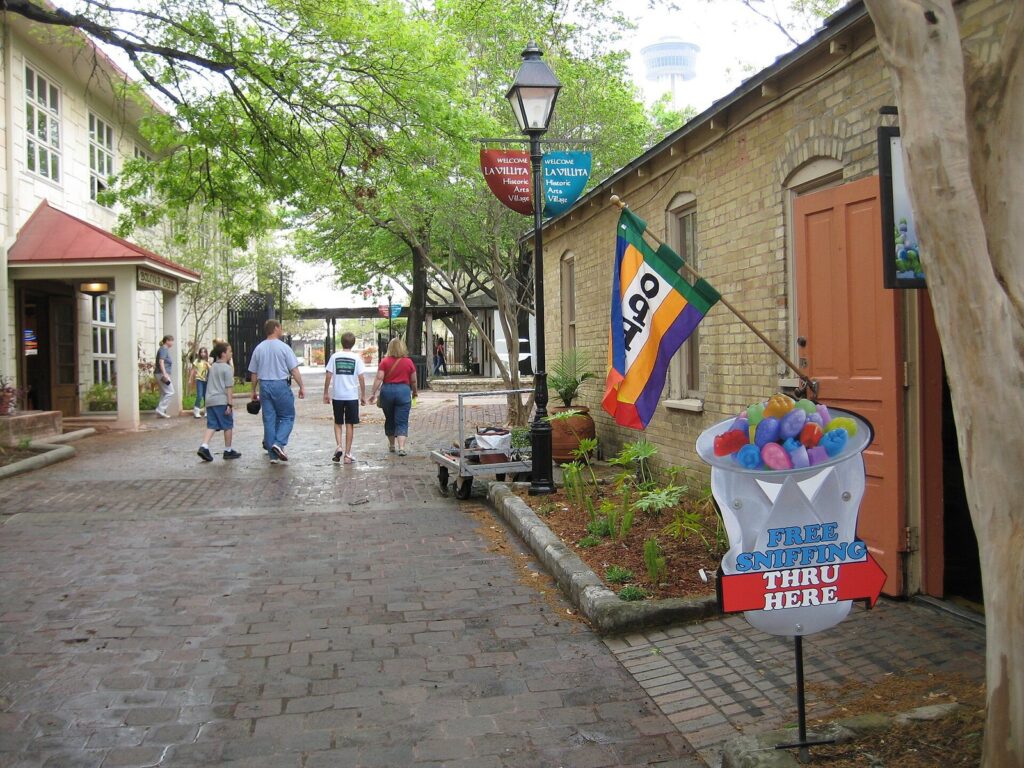
Downtown is the San Antonio on the postcards, and it’s the only part of the city where you can spend a whole day without a car. The Alamo sits on Alamo Plaza; La Villita, a compact historic district of shops and galleries, is 10 minutes’ walk away; Main Plaza and San Fernando Cathedral are 13 minutes; the Tower of the Americas and Hemisfair are 16; and Market Square is 19. The River Walk loop, a story below the streets, ties it all together. Our River Walk guide covers the loop in detail, and our Alamo visitor guide covers Alamo Plaza, where construction is ongoing.
The corners of downtown
- La Villita and Hemisfair: free to wander, with La Villita’s shops generally open Monday to Saturday 10 a.m. to 6 p.m. and Sunday 11 a.m. to 4 p.m., and Hemisfair’s park and splash pads next door.
- Main Plaza: the city’s old civic heart, facing San Fernando Cathedral, where The Saga projection show runs every night except Monday at 9 p.m.
- Market Square: open 10 a.m. to 6 p.m. daily with no admission, home to Mi Tierra Café y Panadería and a string of shops under papel picado.
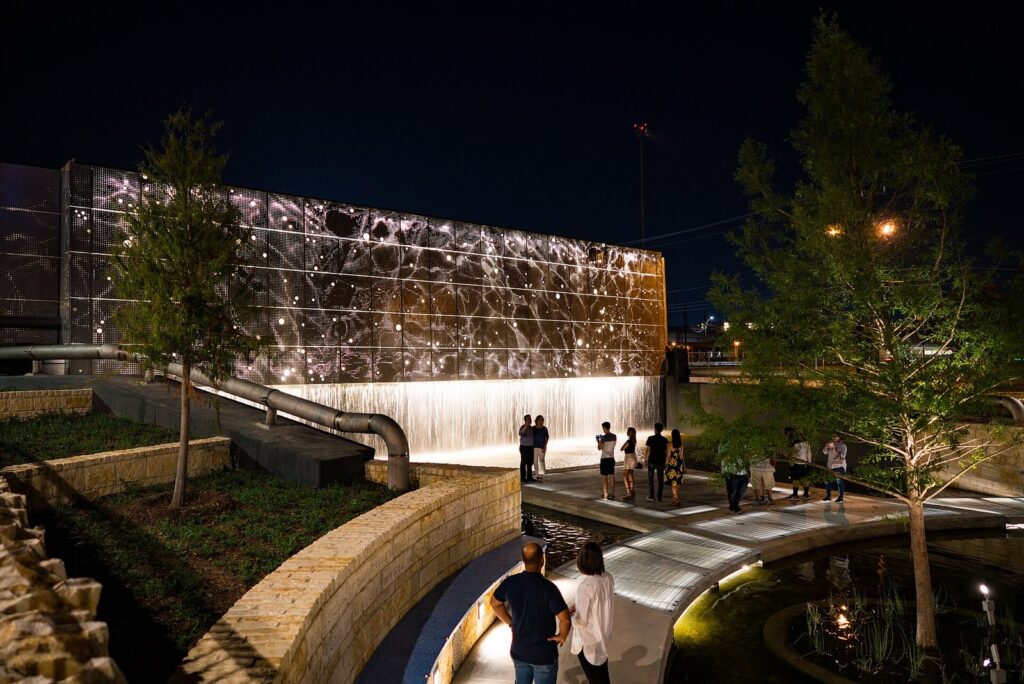
- San Pedro Creek Culture Park: on the west side of downtown, a creek restored as a linear park with public art and more than 12,000 feet of accessible walkways, finished in phases between 2018 and 2025. It runs just over two miles.
Plan it: walk everywhere; City garages charge $2 to $10 a day and are free on Thursdays from 5 p.m. to 2 a.m. through the end of 2026; street meters cost $1.80 an hour with a two-hour limit, Monday to Saturday, 8 a.m. to 6 p.m., and City parking is card only. Evenings are the liveliest in the city, especially on the River Walk on weekends, and the City runs free events on Houston Street on Thursday evenings through 2026. A separate guide will cover downtown and La Villita in more depth.
The Pearl and the Museum Reach
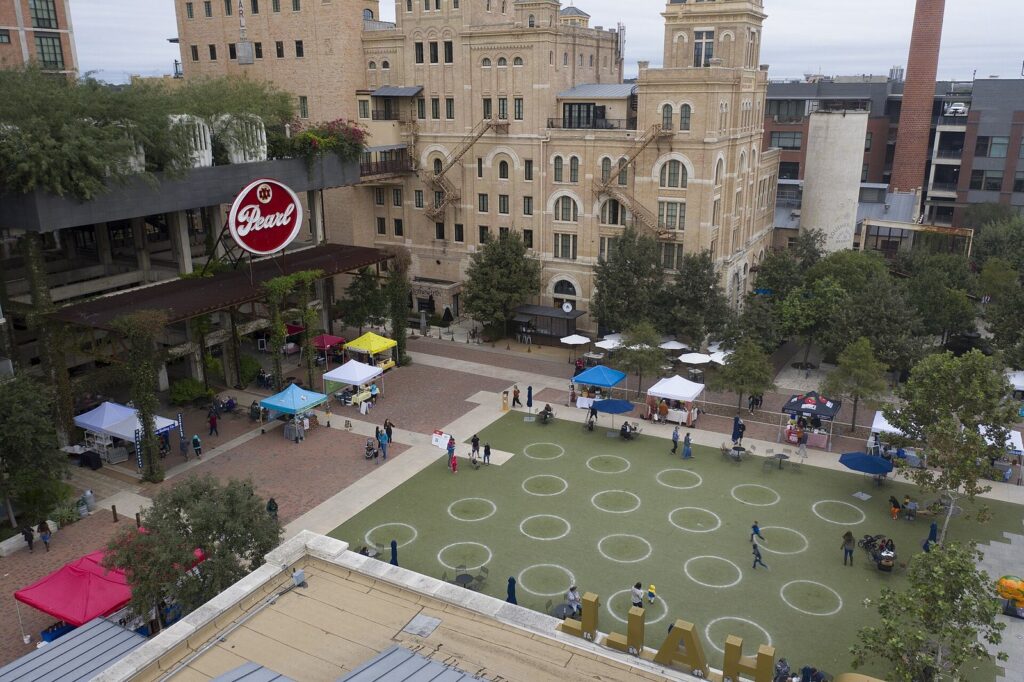
North of downtown, the river’s Museum Reach runs 1.3 miles from Lexington Avenue to the Pearl, a former brewery complex where brewing began in 1883. Today it holds restaurants, shops, Hotel Emma in the old brewhouse, and a campus of the Culinary Institute of America. It’s the best-looking, best-fed corner of the city. The San Antonio Museum of Art, in the old Lone Star Brewery, sits along the Museum Reach on the way.
Lodging: a handful of boutique hotels, led by Hotel Emma, with the Thompson and Hotel Havana closer to downtown along the river. Dining: the densest cluster of good restaurants in the city, including Michelin Bib Gourmand picks Southerleigh and Ladino, and the Pullman Market food hall, home of the Michelin-starred Isidore. Transit: the Go Rio river shuttle runs to downtown daily from noon to 8 p.m., about once an hour; otherwise rideshare. Parking: Pearl surface lots are free on weekdays before 3 p.m., then $4 flat Monday to Thursday and $13 from 3 p.m. Friday and all weekend, and the Koehler Garage is $5 for up to two hours. Evenings: restaurant-centered and calmer than downtown, with Wednesday night markets from 5 to 9 p.m. through November 25, 2026 and free Yoga Under the Stars on Thursdays.
Separate guides will cover the Pearl on its own, the Tobin Hill neighborhood around it, and a head-to-head of the Pearl and Southtown.
Southtown and the King William district
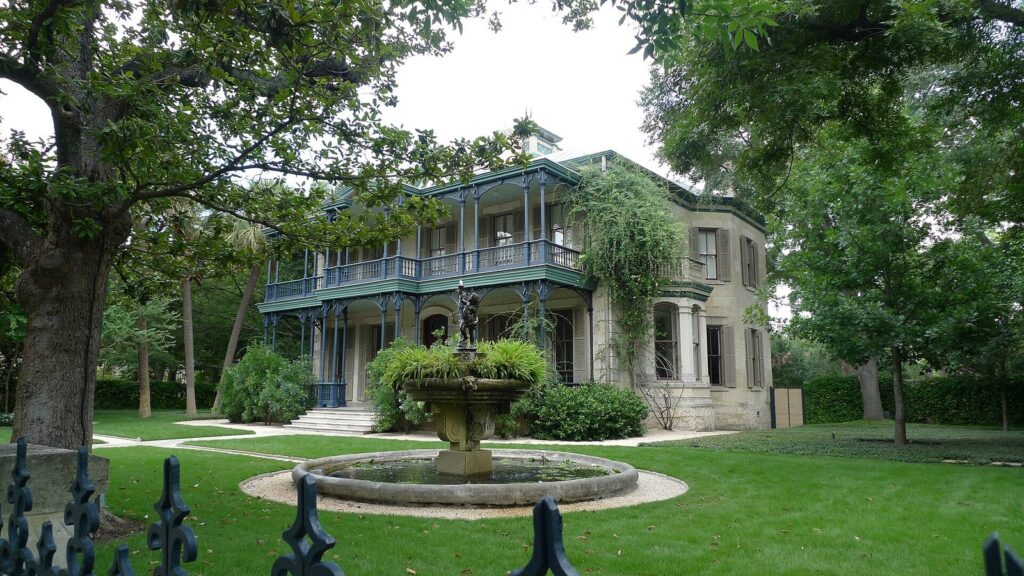
South of downtown, the King William Historic District is the neighborhood German immigrants settled and named for King Wilhelm I of Prussia. It became a city historic district in 1968 and joined the National Register in 1972, and its big houses under old trees make it the best walk in the city for architecture. The river path runs along its edge. Southtown, the broader area around it, adds cafes, bars and the Blue Star Arts Complex, where former ice and cold-storage warehouses became galleries and studios; the first gallery opened in 1986.
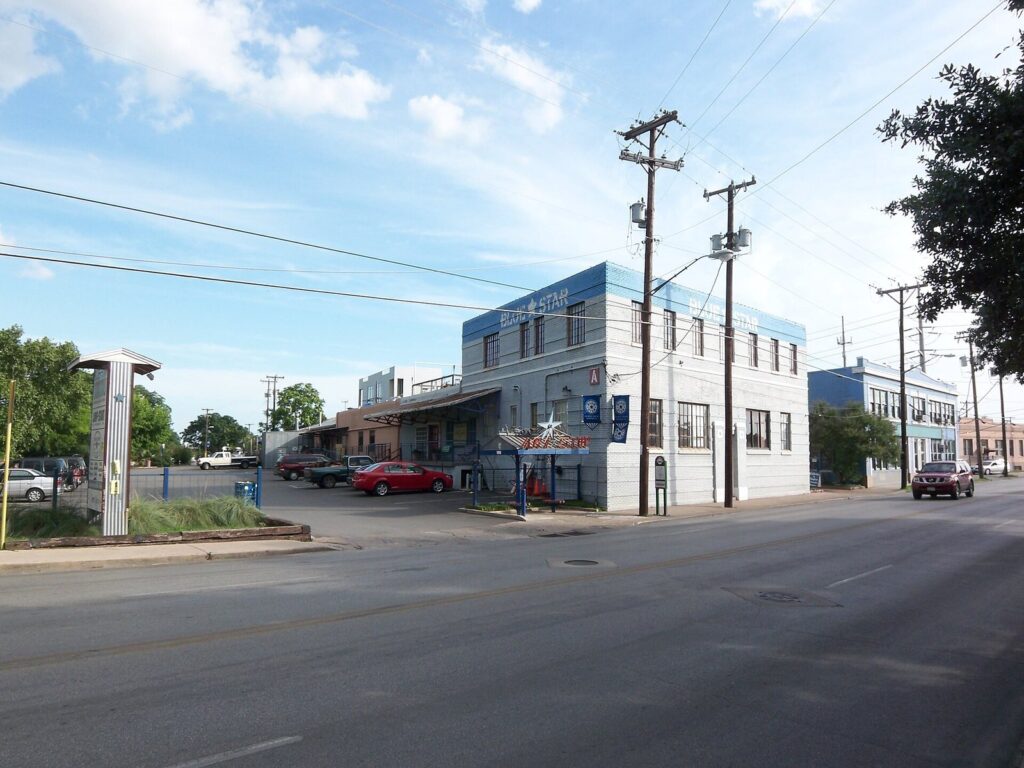
Lodging: bed and breakfasts and small inns, including Brackenridge House, Noble Inns’ three B&Bs, King William Manor and Hotel King William. Dining: the Guenther House restaurant serves breakfast and lunch Wednesday to Sunday, 8 a.m. to 2 p.m., and Southtown’s cafes and bars fill the evenings. Transit: walk the river path to downtown, about 31 minutes by street, or take a four-minute ride. Parking: easier than downtown; ask your inn. Evenings: quiet residential streets, except on First Friday, the free art walk at Blue Star that starts at 6 p.m.; the remaining 2026 dates are October 2, November 6 and December 4.
A separate guide will lay out a King William walking tour, and another will cover Southtown.
The Historic Westside
West of downtown, the Historic Westside is the Mexican-American heart of San Antonio, and one of the most important neighborhoods for understanding the city. Its cultural anchor is the Guadalupe Cultural Arts Center, founded in 1980 to promote Chicano, Latino and Native American arts. It’s based in the 350-seat Guadalupe Theater, which opened in 1940 as the West Side’s grandest movie house and closed in 1970 before its revival. The Guadalupe hosts ballet folklórico, flamenco, mariachi, Tejano and conjunto music, theater, films, exhibitions and markets year-round.
The Westside is also where the puffy taco lives. Ray’s Drive Inn, at 822 SW 19th Street, calls itself the home of the original, and Henry’s Puffy Tacos, opened in 1978 by Ray’s brother, has a location on W. Woodlawn Avenue. Our San Antonio food guide covers what to order.
Plan it: go by car or rideshare; check the Guadalupe’s calendar for evening performances; pair it with Market Square and San Pedro Creek Culture Park on the west edge of downtown. A separate guide will cover the Westside for visitors, and another the city’s cultural corridors.
St. Paul Square and the East Side
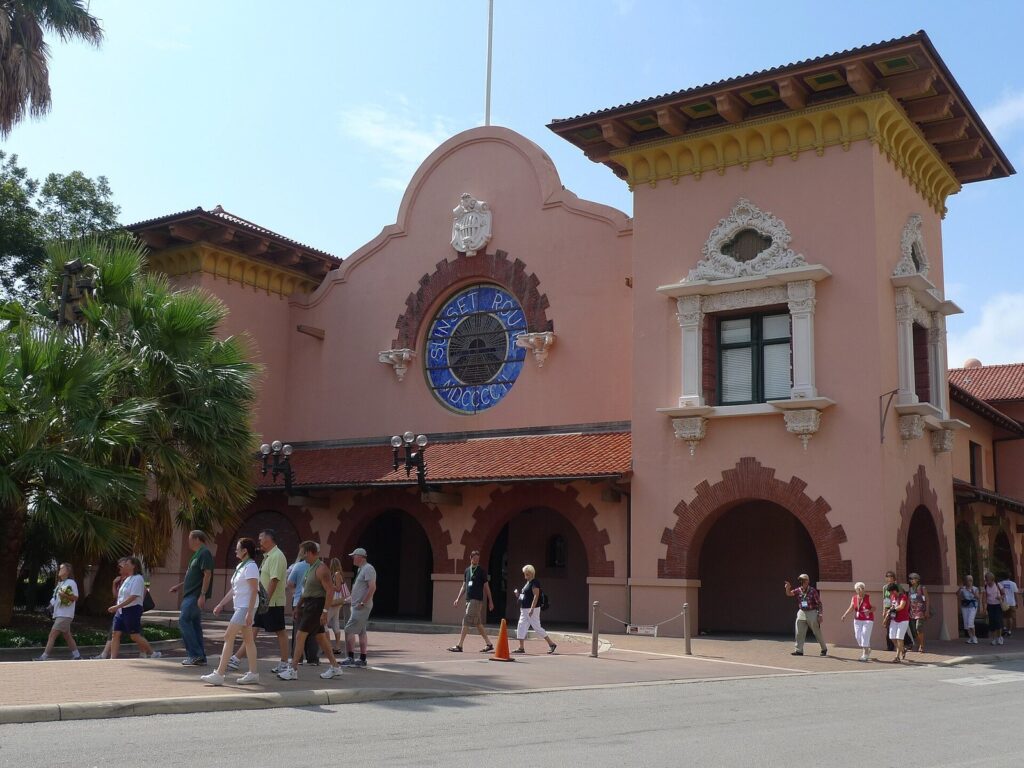
Just east of downtown, St. Paul Square grew up around Sunset Station, a Spanish Mission-style depot built in 1902, a generation after the railroad reached San Antonio in 1877. In the first half of the 20th century, the square was a commercial and entertainment hub for San Antonio’s Black community. Nearby, Dignowity Hill, founded in the 1850s by the Czech physician Anthony Michael Dignowity, is a hilltop neighborhood of Victorian and Craftsman houses. San Antonio’s Amtrak station sits beside Sunset Station.
The wider East Side holds the city’s big arenas, including the Frost Bank Center, home of the San Antonio Stock Show & Rodeo, which runs February 11 to 28, 2027. On arena and Alamodome nights, traffic and parking tighten fast.
Plan it: a short ride from downtown; come for dinner in St. Paul Square or a walk through Dignowity Hill’s streets in the cool of the morning; check event calendars before you drive over on a big night. Our guide to San Antonio events lists the rodeo and the season’s other big dates.
Brackenridge Park and Alamo Heights
North of the Pearl, Brackenridge Park is the city’s great central park, open 5 a.m. to 11 p.m., with the Japanese Tea Garden, the Sunken Garden Theater, the San Antonio Zoo and about 1.7 miles of walking trails, with a stretch of the river running through it. The Witte Museum sits at its edge, with free parking, and VIA Routes 9 and 14 serve both. The Japanese Tea Garden is free and open 7 a.m. to 5 p.m., and its cafe, Jingu House, is walk-in only.
Beyond the park is Alamo Heights, which, despite the name, isn’t part of San Antonio. It’s an independent city almost entirely surrounded by San Antonio, about 5 miles north of downtown, with its own council, police, tax rate and school district and about 7,357 residents in 2020. Its stretch of Broadway is the walkable part, with neighborhood restaurants and shops. The McNay Art Museum is nearby, 9 minutes’ drive from the Alamo, with free general admission on Thursdays from 4 to 9 p.m. and the first Sunday of the month from noon to 5 p.m.
Plan it: a car or VIA; the Tea Garden in the morning, the Witte at midday, and dinner on Broadway. A separate guide will cover things to do in Alamo Heights.
The South Side and the Mission Reach
South of downtown, the river becomes the Mission Reach and leads to the four missions of San Antonio Missions National Historical Park, all free with free parking and open 9 a.m. to 5 p.m. Mission Concepción is 7 minutes’ drive from the Alamo, San José 11, San Juan 14 and Espada 17. VIA Route 42 reaches only Concepción and San José, and San Antonio BCycle has e-bike stations at all four missions, at Espada Dam and at Confluence Park, where San Pedro Creek meets the river. The Mission Reach trail is open only from dawn to dusk, and it can flood after heavy rain.
Our San Antonio Missions guide has one-, two- and four-mission routes by car, bike and bus.
The northwest: La Cantera and the theme parks
The northwest is suburban San Antonio: highways, shopping and the big attractions. Six Flags Fiesta Texas sits in a former quarry at I-10 and Loop 1604, about 27 minutes from the Alamo. Nearby, the Shops at La Cantera, an open-air two-level mall that opened in 2005, has about 200 stores, and The Rim shopping center is across the area on La Cantera Parkway. Signia by Hilton La Cantera Resort & Spa is the big resort. SeaWorld is on the west side, about 30 minutes out, and the JW Marriott’s resort sits farther north.
Plan it: you’ll need a car; base yourself here only for theme-park days, shopping or a resort weekend. Our San Antonio theme parks guide compares the parks, and a separate guide will cover the La Cantera district.
Which walks link the neighborhoods?
Two routes connect several neighborhoods on foot, and both are best early in the day from May to September.
North: downtown to the Pearl
From the Alamo, follow the river north past the Tobin Center for the Performing Arts to Lexington Avenue, where the Museum Reach begins. From there it’s 1.3 miles to the Pearl, passing the lock at Brooklyn Avenue, public art under the bridges and the San Antonio Museum of Art in the old Lone Star Brewery. By street, the Alamo to the Pearl is 1.5 miles, about 33 minutes, so allow at least an hour on the winding river path, more with stops. Finish with lunch at the Pearl and take the Go Rio shuttle, a rideshare or the same path back.
South: downtown to Southtown
From the Alamo, walk 10 minutes to La Villita and down to the river, then follow the river path south along the edge of the King William district, where the big houses face the water, to the Blue Star Arts Complex. By street, King William and Blue Star are each about 1.4 miles, or 31 minutes, from the Alamo. Time it for a Guenther House breakfast (Wednesday to Sunday, 8 a.m. to 2 p.m.) or for First Friday at Blue Star from 6 p.m., and take a rideshare back if the heat has won.
How accessible are the neighborhoods?
- Downtown: the streets are flat, but the River Walk sits a story below them and many entrances are stairs only. Paseo del Alamo, between Alamo Plaza and the river, reopened on July 2, 2026 with an elevator, and the City’s River Walk accessibility maps and Disability Access Office (210-207-7957) can point you to others.
- San Pedro Creek Culture Park: its 12,793 linear feet of walkways are all ADA accessible, which makes it one of the easiest downtown walks for wheelchairs and strollers.
- The Pearl, Hemisfair and Market Square: at street level, open and easy.
- King William: older sidewalks and historic inns with stairs; ask your inn about access before you book.
- The missions: each lends wheelchairs, and the main routes are mostly paved and flat, with some gravel and flagstone.
- The northwest: malls and resorts built for cars, with easy parking and level access.
How do you get between neighborhoods?
| How | Best for | Cost | Watch out for |
|---|---|---|---|
| On foot | Downtown, the Pearl, Southtown along the river | Free | Heat from May to September, and River Walk stairs |
| VIA bus | The airport (Route 5), the missions (Route 42), Brackenridge Park (Routes 9 and 14) | $1.30 a ride, $2.75 a day pass | Detours during big events and construction; tap to pay, but not with Amex |
| Go Rio river shuttle | Downtown to the Pearl | 1-day and 3-day passes | It runs noon to 8 p.m., about once an hour |
| BCycle e-bike | The Mission Reach and the river corridor | $15 for an hour, $25 for a day of one-hour trips | Shade is scarce on the Mission Reach |
| Rideshare | The Westside, the East Side, Alamo Heights, evenings | Varies | Pickups move away from street closures on event nights |
| Car | The missions, the northwest, the theme parks | Parking fees downtown | Downtown garages and meters; free parking at the missions and the Witte |
When is each neighborhood at its best?
| Neighborhood | Best time | Why |
|---|---|---|
| Downtown | Early morning and weeknight evenings | Quiet at the Alamo at its 9 a.m. opening; the River Walk lights and The Saga after dark; the holiday lights from November 27, 2026 into early January |
| The Pearl | Saturday morning, or dinner | The farmers market runs 9 a.m. to 1 p.m.; the Wednesday night markets run 5 to 9 p.m. through November 25, 2026 |
| Southtown and King William | Weekday mornings, or First Friday | Cool walks past the houses; the art walk from 6 p.m. on the first Friday of the month |
| The Westside | Lunch, or an evening performance | Puffy tacos at midday; events at the Guadalupe at night |
| St. Paul Square and the East Side | Morning walks and dinner | Dignowity Hill’s streets in the cool of the day; avoid big arena nights unless you’re going |
| Brackenridge Park and Alamo Heights | Morning | The Japanese Tea Garden opens at 7 a.m.; the Witte at 10 a.m. most days |
| The South Side and the missions | 9 a.m., October to April | The missions open at 9 a.m., and the trail has little shade |
| The northwest | Theme-park season | Fiesta Texas and the malls, with fall and holiday events at the park |
Whatever the neighborhood, the city’s calendar matters too. Fiesta San Antonio fills downtown from April 15 to 25, 2027, and the holiday river parade on November 27, 2026 packs the River Walk for an evening, so check the dates before you pick a base.
What are the neighborhoods like at night?
- Downtown: the busiest, with the River Walk patios full, boats until 10 p.m. and The Saga at 9 p.m. except Mondays. Weekends are loud on the loop.
- The Pearl: dinner-focused and relaxed, with markets on Wednesday evenings in the fall.
- Southtown: bars and cafes, with a big crowd on First Friday and quiet streets the rest of the month.
- The East Side: busy on arena and Alamodome nights, otherwise calm.
- The Westside: performances at the Guadalupe; otherwise mostly residential.
- Alamo Heights and the northwest: neighborhood and mall dining; early nights.
- The missions: closed after dark; the Mission Reach trail shuts at dusk.
How do you keep the places straight?
San Antonio’s geography confuses visitors, and a few distinctions matter for planning:
- The City of San Antonio, Bexar County and its neighbors: San Antonio is the city; Bexar County surrounds it and runs places like Hot Wells. Alamo Heights is a separate city inside San Antonio’s borders. New Braunfels, home of Schlitterbahn, is in Comal County, up I-35.
- The three River Walks: the downtown loop, the Museum Reach north to the Pearl and the Mission Reach south to the missions are all “the River Walk,” with different hours and very different atmospheres.
- The Alamo and the missions: the Alamo is state-owned and run by the Alamo Trust; the four missions are a national park. All five share one UNESCO World Heritage listing.
- The Pearl and the Museum Reach: the Pearl is a district; the Museum Reach is the river path that leads to it.
How did San Antonio’s neighborhoods form?
The city’s neighborhoods are layers of its history, and knowing the order helps them make sense. Spanish missions came first: San Antonio de Valero, now the Alamo, in 1718, San José in 1720, and three more moved from East Texas in 1731, all along the river, where Indigenous families lived and farmed under Spanish rule. The civic center grew around Main Plaza, whose formal name, Plaza de las Islas Canarias, recalls the Canary Islands settlers of the colonial town.
In the 1800s, German immigrants built the grand houses of King William, and the railroad’s arrival in 1877 gave the East Side its depot, Sunset Station, finished in 1902, and a commercial center at St. Paul Square that became a hub of Black San Antonio. Brewing began at the Pearl in 1883. The West Side grew into the center of Mexican-American life, with the Guadalupe Theater opening in 1940.
The 20th century remade the river: flood control after 1921, the River Walk built with WPA funds from 1939, the extension for HemisFair ’68, the Museum Reach in 2009 and the first mile of the Mission Reach in 2010. The newest layer is San Pedro Creek Culture Park, built in phases from 2018 to 2025 on the west side of downtown.
Neighborhood itineraries
- A downtown-and-Southtown day: the Alamo at 9 a.m., La Villita and Hemisfair, lunch at Market Square, an indoor afternoon, then dinner in Southtown and a walk through King William as it cools.
- A Pearl-and-parks day: the Pearl’s farmers market on a Saturday morning, the Japanese Tea Garden and the Witte, then dinner back at the Pearl.
- A Westside-and-East-Side day: puffy tacos for lunch, San Pedro Creek and Market Square in the afternoon, and dinner in St. Paul Square, with an evening at the Guadalupe if something’s on.
- A missions morning: Concepción and San José by car or bike, then back north to Southtown for lunch.
For full timed plans, see our San Antonio itineraries, and for the city’s highlights ranked by cost and time, our shortlist of things to do in San Antonio.
San Antonio neighborhoods FAQ
What is the best neighborhood in San Antonio for visitors?
Downtown, for a first visit: it’s the only area where you can walk to the Alamo, the River Walk, La Villita, Hemisfair and Market Square without a car. The Pearl is the best alternative if food matters more than landmarks. Southtown and King William suit travelers who want historic inns and quieter evenings within a short ride of downtown.
Is the Pearl within walking distance of downtown?
Yes, but it’s a real walk: about 1.5 miles, or 33 minutes by street from the Alamo, and longer along the Museum Reach, which runs 1.3 miles from Lexington Avenue to the Pearl. In summer, walk early or take the Go Rio river shuttle, which runs from noon to 8 p.m., or a four-minute rideshare.
Is Alamo Heights part of San Antonio?
No. Alamo Heights is an independent city almost entirely surrounded by San Antonio, with its own council, police, tax rate and school district. It’s about 5 miles north of downtown, beyond Brackenridge Park, and its Broadway corridor is the walkable part, with neighborhood restaurants and shops.
What is the Historic Westside known for?
Mexican-American culture and history. It’s home to the Guadalupe Cultural Arts Center, founded in 1980 in a 1940 movie theater, which presents ballet folklórico, mariachi, conjunto music, theater and film. It’s also where the puffy taco lives, at Ray’s Drive Inn and Henry’s Puffy Tacos.
Which neighborhoods are best without a car?
Downtown and the Pearl, linked by the Museum Reach walk and the Go Rio shuttle, and Southtown, linked to downtown by the river path. VIA buses reach the airport, two of the missions and Brackenridge Park. For the Westside, the East Side, Alamo Heights and the northwest, plan on rideshares or a car.
Where is San Antonio’s art scene?
Spread across several neighborhoods. Southtown has the Blue Star Arts Complex and its free First Friday art walk. The San Antonio Museum of Art sits on the Museum Reach near the Pearl, the McNay is near Alamo Heights, and the Westside’s Guadalupe Cultural Arts Center focuses on Chicano, Latino and Native American arts. Downtown adds public art along San Pedro Creek.
Where is the nightlife in San Antonio?
Downtown’s River Walk is the busiest after dark, especially on weekends. The Pearl is the place for a long dinner, Southtown for bars and First Friday, and St. Paul Square for dinner on the East Side. On Thursdays through 2026, the City runs free events on Houston Street downtown.
Related San Antonio Guides
- Where to Stay in San Antonio: hotels and inns in each neighborhood, with parking and noise compared.
- San Antonio River Walk Guide: the river that links downtown, the Pearl and the missions.
- San Antonio Food Guide: what to eat in each part of the city.
- San Antonio Itineraries: timed days that string the neighborhoods together.
- San Antonio Missions Guide: the South Side’s four missions by car, bike and bus.
Sources and How We Checked
This guide was checked on September 23, 2026 and is compiled from the agencies, organizations and operators listed below, not from other travel lists; it describes places from those sources and claims no first-hand visits.
- City of San Antonio: Parking FAQs, Affordable Parking, Market Square, Brackenridge Park, Hemisfair
- City of Alamo Heights: Alamo Heights facts
- Downtown: La Villita, Main Plaza: The Saga, San Pedro Creek Culture Park, Mi Tierra
- The Pearl and the Museum Reach: Pearl history, About the Pearl, Pearl parking, Pearl markets, Museum Reach map (PDF), San Antonio Museum of Art, Michelin Guide: San Antonio
- Southtown and King William: King William Association, Blue Star Arts Complex, First Friday, Guenther House, Brackenridge House
- The Westside: TSHA Handbook: Guadalupe Cultural Arts Center, Ray’s Drive Inn
- The East Side: St. Paul Square, Frost Bank Center
- North and northwest: Witte Museum, Japanese Tea Garden, McNay Art Museum, The Shops at La Cantera, Six Flags Fiesta Texas
- The missions: National Park Service, Confluence Park
- Getting around: VIA fares, Go Rio river shuttles, San Antonio BCycle
- Walking and driving times: OpenStreetMap routing from Alamo Plaza
San Antonio Tourism Guide is an independent publication. We are not affiliated with Visit San Antonio, the City of San Antonio, the Alamo or any attraction listed here, and no one paid to be included.
Photo Credits
- San Pedro Creek Culture Park: photo by Nan Palmero from San Antonio, TX, USA, Wikimedia Commons (CC BY 2.0)
- La Villita: photo by Johnpeter2008 at en.wikipedia, Wikimedia Commons (Public domain)
- Pearl farmers market: photo by USDAgov, Wikimedia Commons (Public domain)
- House in the King William Historic District: photo by Tony Kent, Wikimedia Commons (CC BY-SA 2.0)
- Blue Star Arts Complex: photo by Brownings (talk) (Uploads), Wikimedia Commons (CC BY-SA 3.0)
- Sunset Station: photo by Tony Kent, Wikimedia Commons (CC BY-SA 2.0)