This San Antonio missions one day itinerary runs north to south, the way the river and the missions line up. Start at Mission Concepción when the buildings open at 9 a.m., then move on to Mission San José for its visitor center, film and 11 a.m. ranger walk. After lunch, continue to Mission San Juan and the Espada Aqueduct, and finish at Mission Espada in time for its 3 p.m. weaving demonstration. By car, the whole loop from the Alamo and back is about 23 miles and 45 minutes of driving on our measured routes, and admission and parking are free at every mission. Allow six to seven hours with lunch, or a full day if you’re riding the Mission Reach trail by bike.
This plan is for anyone who wants to see all four Spanish missions of San Antonio Missions National Historical Park properly, not just snap photos from the parking lot. Two things shape the day: heat, because the grounds and the trail are mostly unshaded, and the fact that all four churches are active Catholic parishes that can close for weddings and funerals. For an overview of each mission and the other ways to visit, see our San Antonio missions guide. Everything here was checked October 1, 2026 against the National Park Service’s pages, when its alerts page listed no closures, plus VIA, BCycle and driving and cycling routes we measured with OpenStreetMap.
| Question | Short answer |
|---|---|
| Cost | Free admission and free parking at every mission |
| Time needed | Six to seven hours by car with lunch; a full day by bike |
| Driving | About 23 miles and 45 minutes in all, from the Alamo and back |
| Biking | About 19 miles round trip from downtown, roughly 2.25 hours of riding |
| Hours | Buildings 9 a.m. to 5 p.m. daily; grounds sunrise to sunset |
| Time outdoors | Most of the day, with little shade on the grounds and the trail |
| Best time to go | October to April, starting at 9 a.m. |
| Book ahead? | No, except for Rancho de las Cabras tours, which need a reservation |
| Closed | Thanksgiving, Christmas and New Year’s Day |
The route at a glance
Here’s the full day by car, with the drive and bike time between stops on our measured routes. It’s built around the free ranger programs, which run daily except on the first Wednesday of the month and can be cancelled in extreme heat.
| Time | Stop | Drive from the last stop | Bike from the last stop | Time there | Don’t miss |
|---|---|---|---|---|---|
| 9:00 a.m. | Mission Concepción | 7 minutes from the Alamo | 24 minutes | 1 to 1.5 hours | The 10 a.m. ranger talk |
| 10:40 a.m. | Mission San José and the visitor center | 7 minutes | 18 minutes | About 1.75 hours | The 11 a.m. guided walk and the 23-minute film |
| 12:30 p.m. | Lunch | Varies | Varies | About an hour | A picnic, or tacos bought on the way |
| 1:30 p.m. | Mission San Juan | 7 minutes from San José | 19 minutes | 45 minutes | The Farm Loop Trail |
| 2:20 p.m. | Espada Aqueduct | 3 minutes | 6 minutes | 20 minutes | Water still crossing the 1740s arches |
| 2:45 p.m. | Mission Espada | 4 minutes | 9 minutes | About an hour | The 3 p.m. weaving demonstration |
| 3:45 p.m. | Back to the Alamo | 17 minutes | About an hour | Not applicable | Not applicable |
Stop by stop
9:00 a.m. Mission Concepción
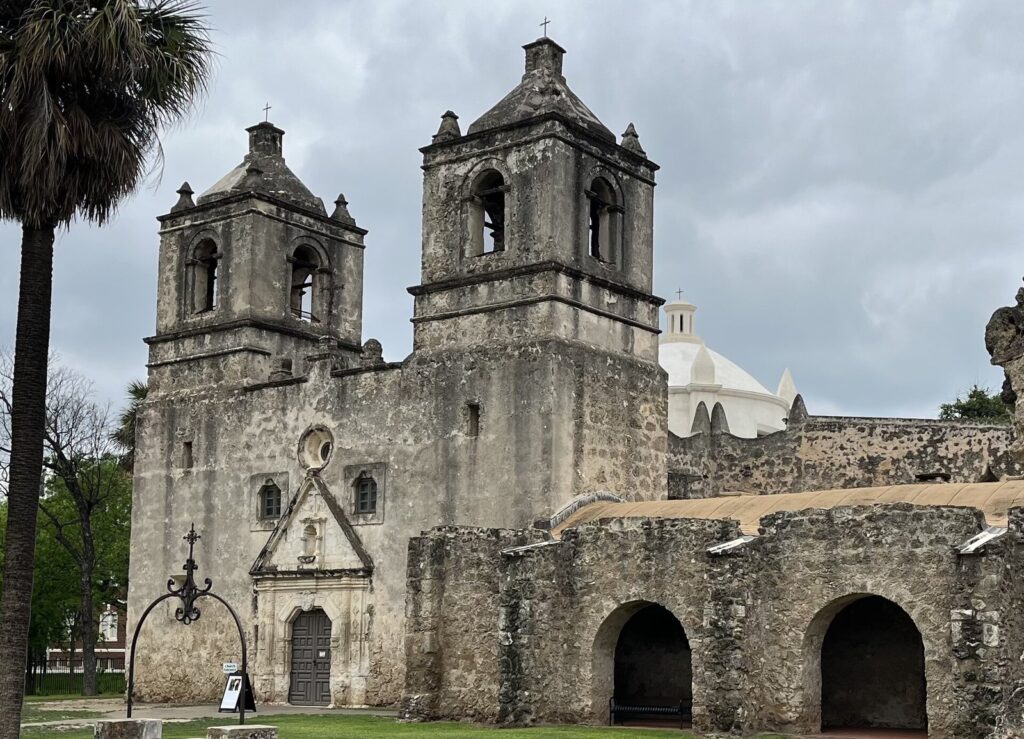
Concepción, at 807 Mission Road, about 3 miles south of downtown and 7 minutes’ drive from the Alamo, is the first mission on the river. It was first founded in East Texas in 1716 and moved to San Antonio in 1731, when Spain added three missions along the river, and its stone church was dedicated in 1755. It’s the place to see how a mission church looked when it was built, since Concepción is often described as the best preserved of the mission churches. Facade restoration was under way in 2026, though the Park Service listed no closures when we checked.
Arrive at 9 a.m., walk the church and grounds while it’s cool, and stay for the free ranger talk at 10 a.m. if it suits you; otherwise, head straight to San José and catch its 10 a.m. walk instead.
Plan it: free; buildings 9 a.m. to 5 p.m., grounds sunrise to sunset; ranger talk 10 a.m.; parking includes 1 van-accessible and 2 accessible spaces; parish office 210-533-8955 for Mass times.
10:40 a.m. Mission San José
Seven minutes south, Mission San José is the park’s centerpiece and home to its main visitor center, at 6701 San José Drive. Founded in 1720, it’s the most complete of the four, with its church, its restored walls and the arches of the old convento, and it’s where you’ll want the most time. The free 23-minute orientation film plays in English on the hour from 10 a.m. to 4 p.m. and in Spanish on the half hour from 10:30 a.m. to 3:30 p.m. Rangers lead guided walks at 10 and 11 a.m., about 45 minutes each, for up to 50 people.
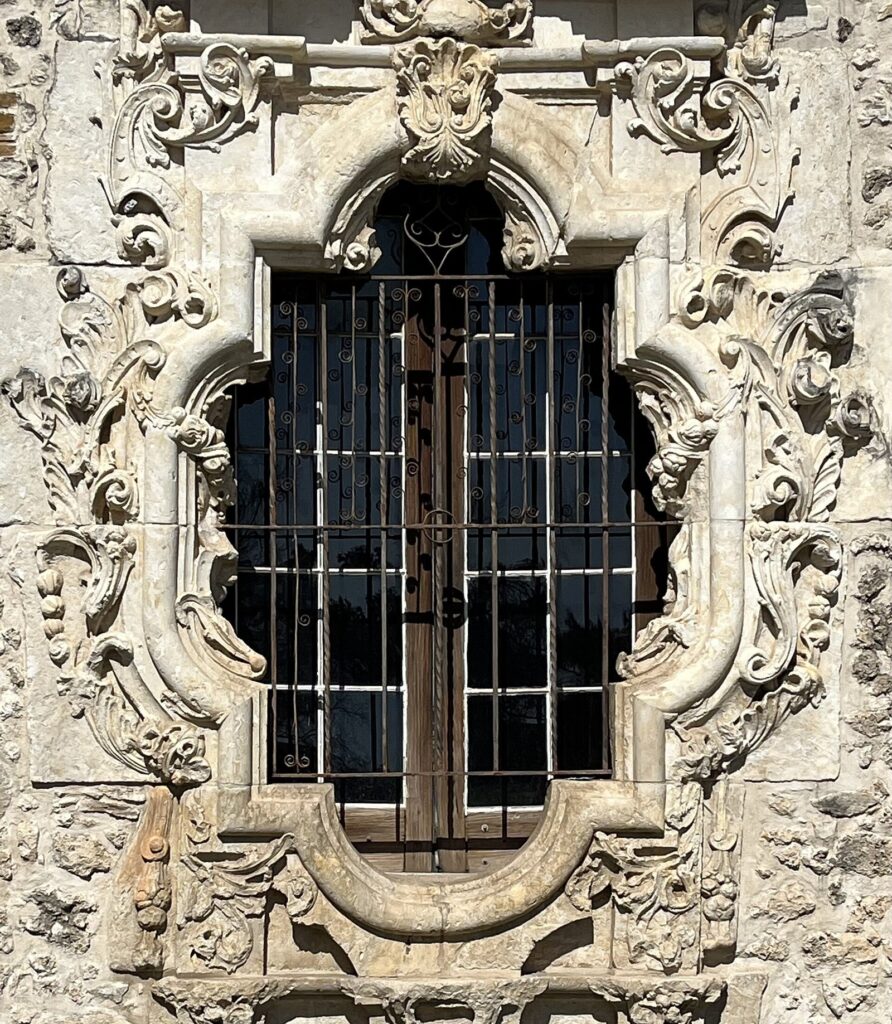
Our suggested order: the 11 a.m. walk first, then the noon film and the visitor center’s exhibits. Before you leave, walk the compound’s outer walls, where the mission’s Indigenous residents, Coahuiltecan bands whose ancestors had lived in the region for thousands of years, had their living quarters. Free WiFi works at the visitor center and on the grounds, which helps if you’re checking a map or the next stop.
Plan it: free; visitor center 9 a.m. to 5 p.m.; film on the hour in English and the half hour in Spanish; guided walks at 10 and 11 a.m.; 6 accessible parking spaces and an EV charger; parish office 210-922-0543.
12:30 p.m. Lunch
There’s no café at the missions, so plan lunch before you set out. The simplest answer is a picnic: buy tacos to go on your way south and eat them in the shade on the grounds, or on a bench along the Mission Reach trail, where the Park Service says you’ll find water fountains and restrooms. Our guide to San Antonio’s breakfast tacos lists taquerías that open early, several within a short drive of downtown. If you’d rather sit down, drive back toward downtown or Southtown and resume at San Juan; you’ll add about 20 minutes.
1:30 p.m. Mission San Juan
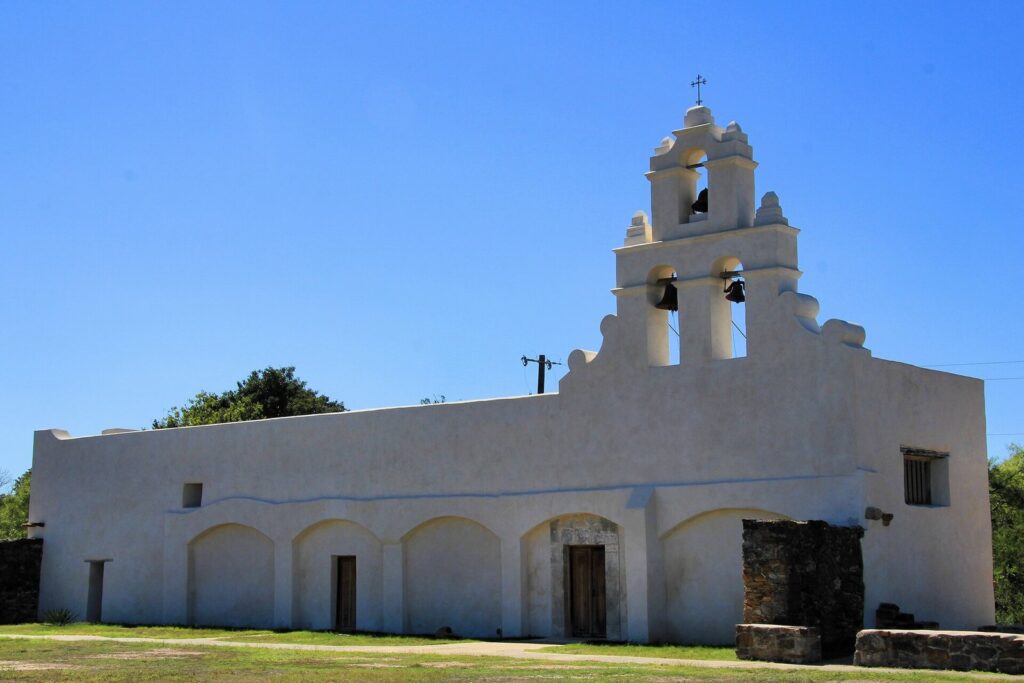
Mission San Juan Capistrano, at 9101 Graf Road, 7 minutes south of San José, was the missions’ farm. It moved to San Antonio in 1731 and still has a small white church with an open bell wall, plus fields that hint at how the community fed itself. Walk the 0.2-mile Farm Loop Trail, and if you have energy, the 0.25-mile Yanaguana Trail, with benches, which connects to the Mission Reach hike-and-bike trail. San Juan’s exhibits were being renovated for accessibility in 2025.
Plan it: free; allow 45 minutes; 6 accessible parking spaces; parish office 210-534-3161.
2:20 p.m. The Espada Aqueduct
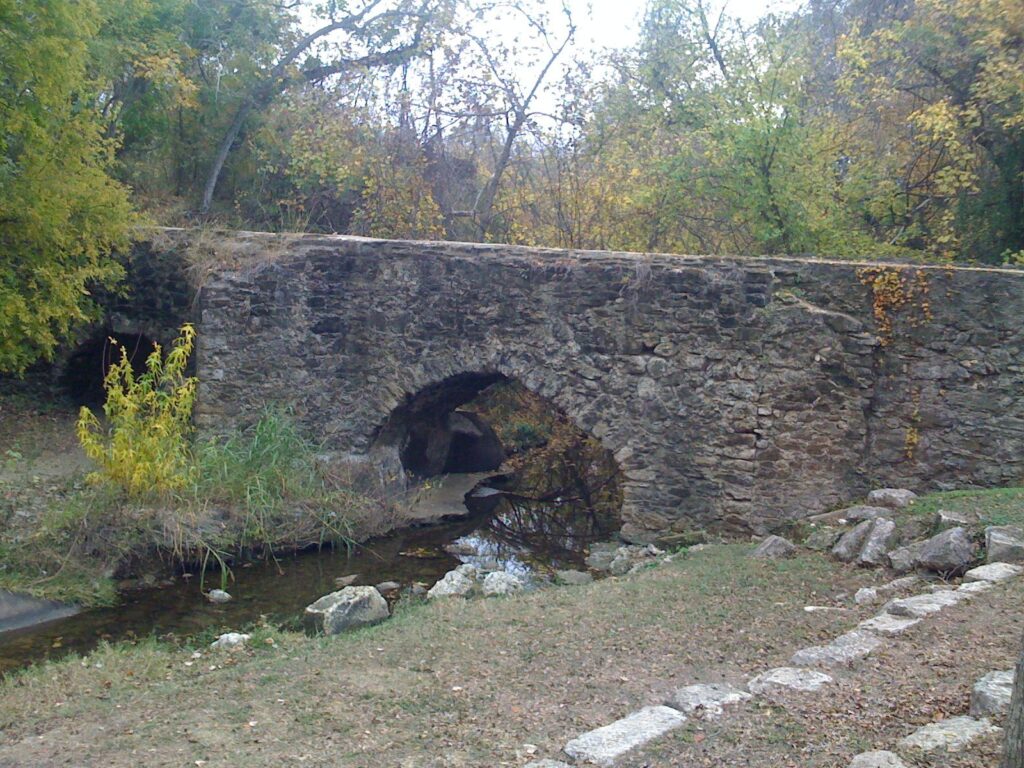
Three minutes from San Juan, the Espada Aqueduct carries an acequia, an irrigation ditch, over Six-Mile Creek, also called Piedras Creek, on two stone arches built between 1740 and 1745. Water still flows across it, and the Park Service calls it the oldest Spanish aqueduct in the United States. It sits north of Mission Espada with its own parking, and the viewing area is nearly level. It’s a short stop, but for many people it’s the most memorable sight of the day: working Spanish colonial engineering, nearly 300 years on.
Plan it: free; allow 20 minutes; viewing area nearly level, with 1 van-accessible and 11 other spaces.
2:45 p.m. Mission Espada
Four minutes on, Mission Espada, at 10040 Espada Road, is the southernmost mission and often the quietest. Its small church has a distinctive stone doorway and bell wall, and at 3 p.m. rangers run a weaving demonstration, a reminder that the missions were working communities, with workshops and storerooms inside the walls and fields and ranches outside them. If you have time and steady legs, Espada Dam is nearby, but its path slopes downhill at more than 14 percent and has no benches; the Park Service suggests visitors with mobility concerns stay in their vehicles there.
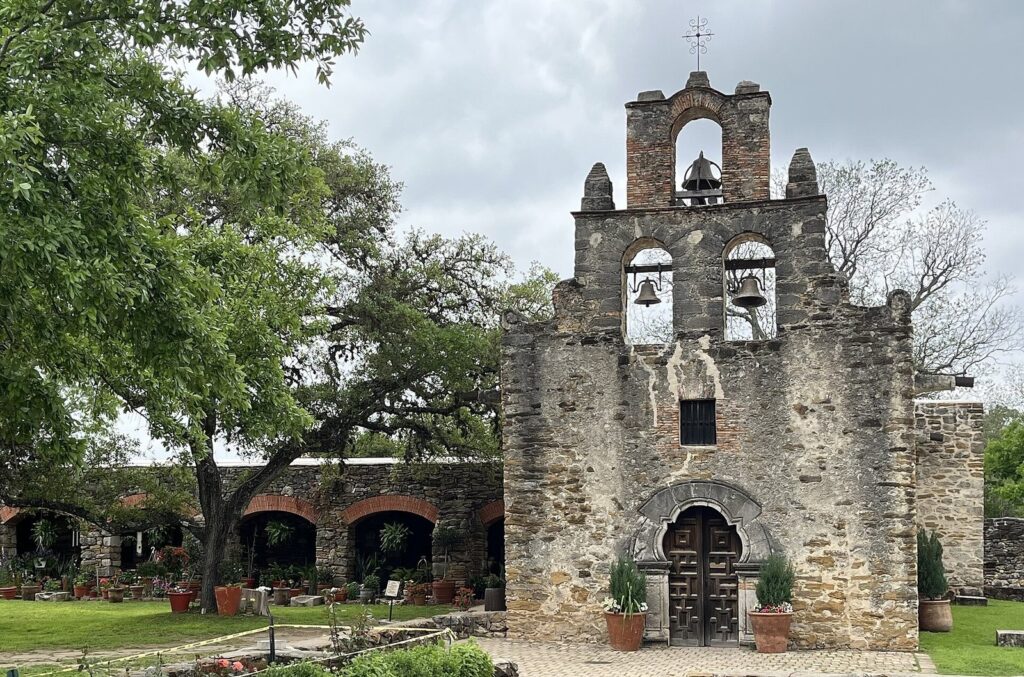
Plan it: free; weaving demonstration 3 p.m.; 1 van-accessible and 1 accessible space; parish office 210-627-2064. From here, the Alamo is 11.6 miles and about 17 minutes by car.
How do the four missions compare on the day?
Each mission rewards a different kind of attention. Use this to decide where to linger and where to keep moving.
| Mission | History in brief | What makes it different | Linger if you like |
|---|---|---|---|
| Concepción | First founded in East Texas in 1716, moved here in 1731; church dedicated 1755 | Often called the best preserved of the mission churches | Architecture and quiet early mornings |
| San José | Founded in 1720 | The visitor center, the film, ranger walks and the most complete compound | History, context and the big picture |
| San Juan | Moved here in 1731 | The farm mission, with short trails through its fields | Land, food and how the communities lived |
| Espada | The southernmost mission, with its aqueduct and dam nearby | Spanish colonial water engineering still at work | Engineering and peaceful corners |
A shorter morning version
Only have the morning? Do the two northern missions. Reach Concepción at 9 a.m., drive 7 minutes to San José for the 10 a.m. guided walk, then watch the 11 a.m. film and walk the walls before driving 11 minutes back downtown. You’ll be back by about 12:30 p.m. having seen the two northern missions and the visitor center, and VIA’s Route 42 can do the same trip without a car.
Stops on the way: Confluence Park and Hot Wells
Two small parks sit near the route and suit a short break. Confluence Park, a San Antonio River Foundation park at 310 W. Mitchell St., by the meeting of the San Antonio River and San Pedro Creek, opened in March 2018; its concrete petal-shaped pavilions are built to collect rainwater, and it’s open from sunrise to 11 p.m. Hot Wells of Bexar County, at 5503 S. Presa St., preserves the ruins of old sulfur-spring resorts and has been a county park since April 2019, with links to the Mission Reach trails; it’s open 9 a.m. to 9 p.m. in summer and 9 a.m. to 6 p.m. in winter. Either takes 20 to 30 minutes and works best on the drive back north.
Should you start at San José or go north to south?
Some guides tell you to begin at San José, because the visitor center and film give you context before you see anything else. It’s a reasonable idea, but on the schedule it’s less efficient: the visitor center opens at 9 a.m., while the first film doesn’t start until 10, and starting at San José means doubling back north to Concepción later.
Going north to south fixes both. You see Concepción at its quietest, reach San José within the hour for the walk and the film, and then keep heading in one direction, finishing at Espada for the afternoon demonstration and an easy drive home. If context first matters more to you than efficiency, start at San José at 10 a.m. with the film, do Concepción after lunch, then drive south to San Juan and Espada; you’ll add a little backtracking.
Can you do the missions without a car?
Yes, with a bus and an e-bike. VIA’s Route 42 (Roosevelt) serves Missions Concepción and San José, about every 30 minutes, but no bus reaches San Juan or Espada. Route 42 had construction detours posted in June and September 2026 and is being realigned on January 11, 2027, so check VIA’s service alerts before you go. A regular fare is $1.30 and a day pass $2.75.
For the southern half, use San Antonio BCycle, the city’s electric bike share, which has stations at all four missions, at Espada Dam and at Confluence Park. Each trip includes 60 minutes, and a $25 day pass covers unlimited one-hour trips for 24 hours; going over an hour costs $3.25 for each extra 30 minutes. Our measured bike legs are well inside an hour: 18 minutes from Concepción to San José, 19 to San Juan, 6 to the aqueduct and 9 to Espada. Dock at each mission’s station and you start a fresh hour every time.
| Car-free plan | How | Time |
|---|---|---|
| Downtown to Concepción | VIA Route 42, or BCycle if there’s a station near your hotel | About 24 minutes by bike |
| Concepción to San José | BCycle, or Route 42 | About 18 minutes by bike |
| San José to San Juan | BCycle on the Mission Reach | About 19 minutes |
| San Juan to the aqueduct and Espada | BCycle | About 15 minutes with the aqueduct |
| Espada back north | BCycle to San José, then Route 42 downtown | About 35 minutes by bike, plus the bus |
The Mission Reach hike-and-bike trail itself is paved, out-and-back rather than a loop, and open from sunrise to sunset. The Park Service gives about 10 to 12 miles for the whole trip between the missions, with each mission about 2 to 3 miles from the next, and the trail continues north to the Alamo. Our San Antonio parks and outdoors guide covers the trail and the paddling route along the river.
How do you adjust the day for heat, Mass or weather?
Heat
The Park Service’s own advice is to hike or bike before 11 a.m., wear sunscreen, sunglasses and a hat, drink plenty of water, eat salty snacks and rest in the shade. From June to August, San Antonio’s average highs run 92 to 96°F, with about 18 days a year at 100°F or more. In summer, do the trail or the outdoor stops first thing, keep the middle of the day for the San José visitor center and the drive, and accept that the ranger programs may be cancelled in extreme heat. The missions’ grounds open at sunrise, so an early start before the buildings open at 9 a.m. is perfectly possible.
Mass, weddings and funerals
All four churches are active Catholic parishes. The Park Service doesn’t publish Mass times and suggests calling the parishes directly, and the churches can close to visitors for weddings and funerals. If you arrive during a service, visit the grounds first and come back to the church, and keep voices low inside. Services and weddings cluster on weekends, so a weekday visit gives you the best chance of seeing every church.
Rain
Heavy rain floods the Mission Reach, and the River Walk’s guidance is to avoid it when the sidewalks aren’t visible. By car, a wet day still works: the churches and the visitor center are indoors. By bike, postpone.
Closed days
The missions close on Thanksgiving, Christmas and New Year’s Day, and there are no ranger programs on the first Wednesday of the month. Otherwise, they’re open every day.
Is the mission route accessible?
More than you might expect. Wheelchairs can be borrowed at the information desk or contact station at each mission, and the routes through the compounds are mostly paved and flat, with stretches of gravel, brick and flagstone. Every mission has accessible parking, from one van-accessible space at Concepción and Espada to six accessible spaces each at San José and San Juan. Skip Espada Dam’s steep path, and note that the Rancho de las Cabras tours cross dirt, gravel and hilly ground, with no restrooms or drinking water. Our accessible San Antonio travel guide covers the rest of the city.
What should you bring?
- Water, and more than you think. There are fountains along the trail, but the grounds are open and the sun is strong most of the year.
- Lunch. There’s no food at the missions themselves.
- Sun protection. A hat, sunglasses and sunscreen, even in spring and fall.
- Closed shoes. The Park Service warns that bees, wasps, fire ants, snakes and scorpions are present in spring and summer, and paths include gravel and uneven stone.
- Respectful clothes. You’re visiting working churches; shoulders covered is a good rule inside.
- A charged phone. For maps and BCycle, and the free WiFi at San José.
Can you add the Alamo and see all five missions?
The Alamo was the first of the five San Antonio missions, and UNESCO inscribed all five as a World Heritage Site in July 2015, which the Park Service calls Texas’s only World Heritage Site. You can see all five in a long day by car. Start at the Alamo when it opens at 9 a.m., with a free timed ticket for the church, and leave by 10:15. Drive 7 minutes to Concepción, reach San José for the 11 a.m. guided walk, and continue as above: lunch, San Juan, the aqueduct and Espada by 3 p.m. You’ll trade Concepción’s ranger talk for the Alamo. Our Alamo tickets guide explains the free church ticket and the paid extras.
If you’d rather spread it out, do the Alamo and the River Walk on one day, following our one-day walking plan, and the four missions on another. And if you’re here between October and March, the free monthly guided tours of Rancho de las Cabras, Mission Espada’s old ranch near Floresville, about 23 miles from the visitor center, add a fifth Park Service site; reserve by emailing the park at [email protected].
For each mission’s history and highlights in more depth, and for help choosing between them if you can’t do all four, go back to our full guide to the San Antonio missions.
San Antonio missions day trip FAQ
Can you see all four missions in half a day?
By car, yes, if you keep moving: the driving is only about 45 minutes in all, so four hours gives you 30 to 45 minutes at each mission plus the aqueduct. You’ll miss most ranger programs and the film. For a relaxed visit with the guided walk and lunch, plan six to seven hours.
Is there food at the missions?
No. There are no cafés or snack bars at the four missions, though the Park Service says the trail has water fountains and restrooms. Pack a picnic, or buy tacos to go before you head south, and eat on the grounds or along the Mission Reach. A sit-down lunch means driving back toward downtown or Southtown.
Can you walk between the missions?
You can, on the Mission Reach hike-and-bike trail, but it’s a long walk: each mission is about 2 to 3 miles from the next, about 10 to 12 miles in all, with little shade. Most people drive or bike. If you want to walk part of it, the stretch between San Juan and the Espada Aqueduct is the shortest, under a mile.
Do you need tickets or reservations for the missions?
No. Admission is free, there’s no entrance pass, and parking is free at every mission. Ranger programs and the film are free and need no booking. The only exception is Rancho de las Cabras, which can be visited only on free monthly guided tours, October to March, reserved by email.
Is Sunday a good day to visit the missions?
It works, but expect services. All four churches are active parishes, and Sunday Masses and weekend weddings can close the churches to visitors for a while. The grounds stay open, and ranger programs run daily except on the first Wednesday of the month. For the best chance of seeing every church interior, go on a weekday.
Which mission should you see if you only have time for one?
Mission San José. It has the park’s visitor center, the orientation film and the daily ranger walks, and it’s the most complete of the four, with its church, walls and convento arches. It’s about 11 minutes’ drive from downtown, and VIA’s Route 42 reaches it.
Related San Antonio Guides
- Alamo Tickets and Reservations: add the fifth mission, with its free timed church ticket.
- One Day in San Antonio: a walking plan for the downtown half of your trip.
- San Antonio Parks and Outdoor Adventures: the Mission Reach trail, paddling and parks.
- Getting Around San Antonio: VIA, BCycle and rideshares.
- San Antonio Culture and History: the Indigenous, Spanish and Tejano story behind the missions.
Sources and How We Checked
This guide was checked on October 1, 2026 and is compiled from the agencies and operators listed below, not from other travel lists. Drive and bike times are our own OpenStreetMap routing measurements between the missions, before traffic. It describes places from those sources and claims no first-hand visits.
- National Park Service, San Antonio Missions: Hours, Fees, Directions, Basic information, Visitor center, Guided programs, Church information, Hike and bike trail, Alerts and conditions, Physical mobility, Accessibility and safety
- National Park Service, places and history: Mission Concepción, Espada Aqueduct, Rancho de las Cabras, History and culture, World Heritage designation
- VIA Metropolitan Transit: Route 42, Service alerts, Fares
- San Antonio BCycle: Pricing, Station list
- San Antonio River Walk: FAQs; NOAA: San Antonio monthly normals, 1991 to 2020
- OpenStreetMap: driving and cycling routes
San Antonio Tourism Guide is an independent publication. We are not affiliated with Visit San Antonio, the City of San Antonio, the Alamo or any attraction listed here, and no one paid to be included.
Photo Credits
- Mission Concepción: photo by Michaelluckey, Wikimedia Commons (CC BY 4.0)
- Rose Window, Mission San José: photo by Michaelluckey, Wikimedia Commons (CC BY 4.0)
- Mission San Juan church: photo by Larry D. Moore, Wikimedia Commons (CC BY 4.0)
- Espada Aqueduct: photo by Tuckerresearch, Wikimedia Commons (Public domain)
- Mission Espada church: photo by Michaelluckey, Wikimedia Commons (CC BY 4.0)