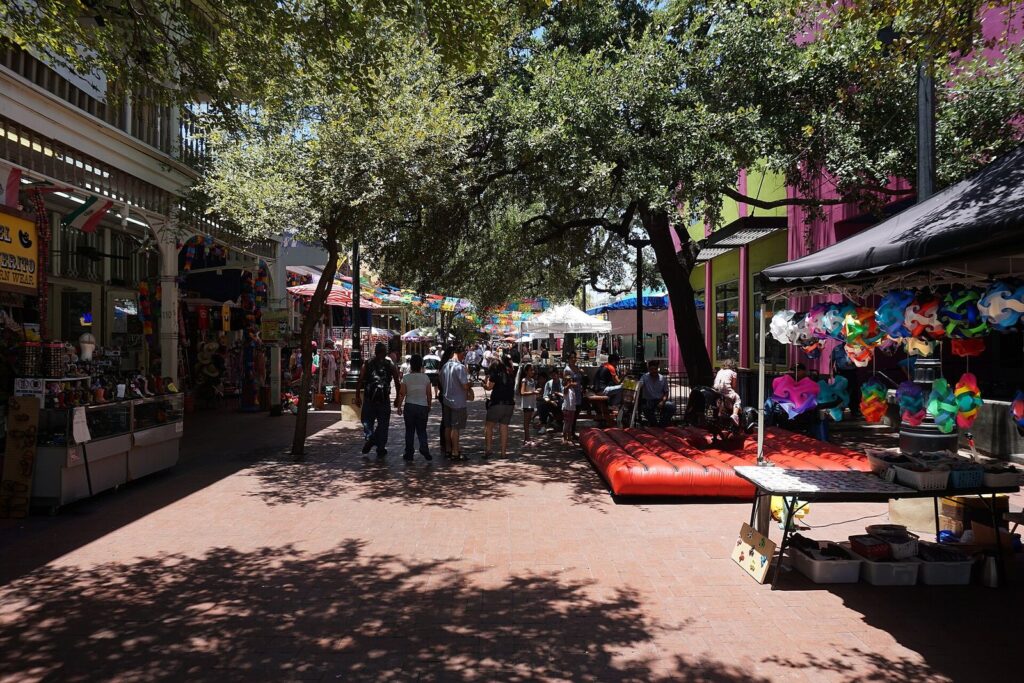
The best way to do Market Square San Antonio shopping is a slow two-hour loop: one pass through the two market buildings, a lap of the plazas where artisans work, and a meal at Mi Tierra or the food court before you buy anything heavy. Historic Market Square, also called El Mercado, fills three city blocks on the west side of downtown, about a 19-minute walk from the Alamo. The City of San Antonio runs it, entry is free, and it’s open from 10 a.m. to 6 p.m. daily, closing on a handful of holidays including Thanksgiving and Christmas Day.
This guide is for first-time visitors who want to know what’s worth buying, where things are and how to tell a handmade piece from a box of identical imports. The honest caveat: quality varies a lot from shop to shop, and plenty of what’s on the shelves is mass-produced, so the tips below matter more than any single store. Hours, events and the shop directory were checked November 19, 2026 against the City of San Antonio, the market’s own site and the restaurants’ own pages. For the rest of the city’s shopping, from the River Walk to the outlets, start with our San Antonio shopping guide.
| Question | Short answer |
|---|---|
| What it costs | Free to enter, and the market’s events are free too. Spending ranges from a sheet of papel picado to silver and leather. |
| Time needed | Two hours for a browse and a meal; an hour if you only want a look. |
| Time outdoors | About half. The plazas and artisan stalls are outside; El Mercado and the Farmer’s Market building are indoors. |
| Best time to go | A weekday at 10 a.m. for quiet aisles; a weekend afternoon for live music. |
| Book ahead | Nothing. Just check the holiday closures and the events calendar. |
What is Market Square, and how is it laid out?
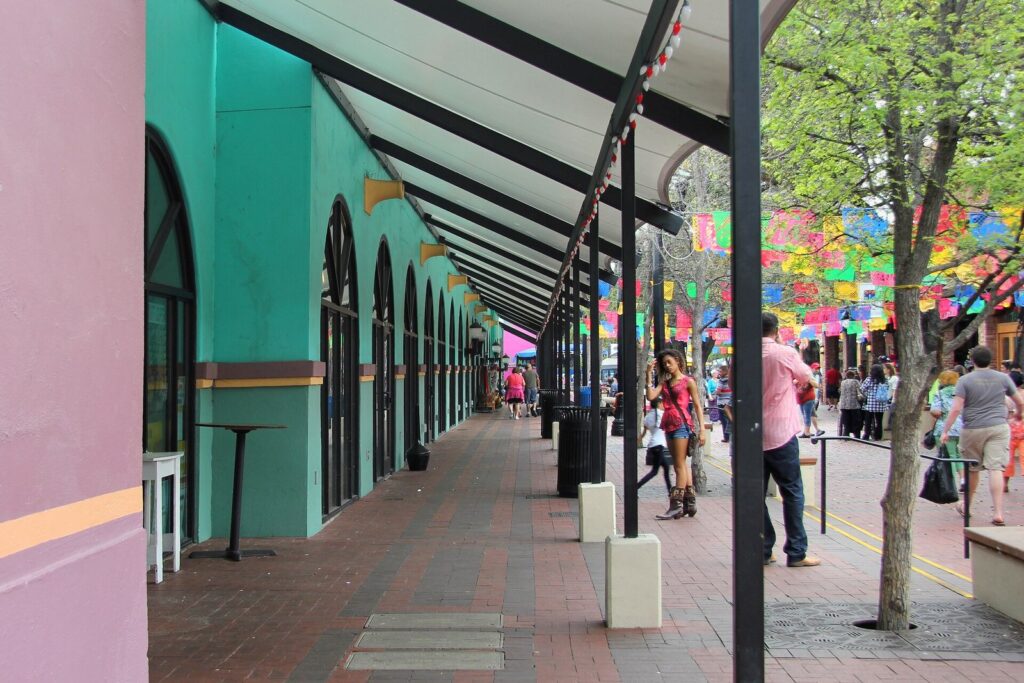
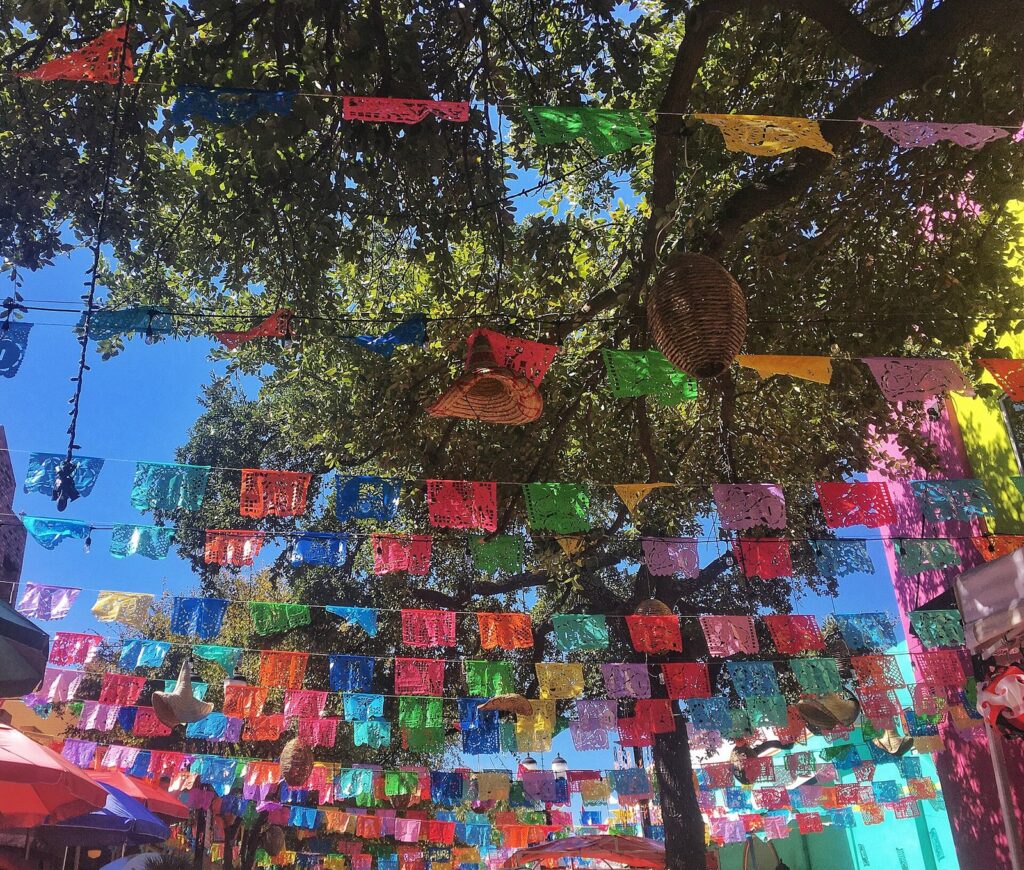
Market Square is a City-run marketplace, managed by the Parks and Recreation Department, at 514 W. Commerce St. The City describes “over 100 locally owned shops and stalls,” spread through two market buildings and the outdoor plazas between them. Since the 1970s, the three blocks bounded by Dolorosa, Santa Rosa and West Commerce streets have been pedestrian malls, so once you’re in, you’re walking on brick under strings of papel picado rather than dodging traffic.
Three parts make up the square, and each shops differently:
| Area | What’s there | Go for |
|---|---|---|
| El Mercado | The indoor market mall, which the City says is “famously described as the largest Mexican market outside Mexico”; dozens of small shops, many selling imports | The densest browse: jewelry, leather, clothing, pottery and folk art |
| Farmer’s Market building | More shops plus the food court | Gifts, prints, silver and a quick, cheap lunch |
| The plazas | Artisans’ stalls, food booths on event days and the stage | Watching makers work, and the weekend music |
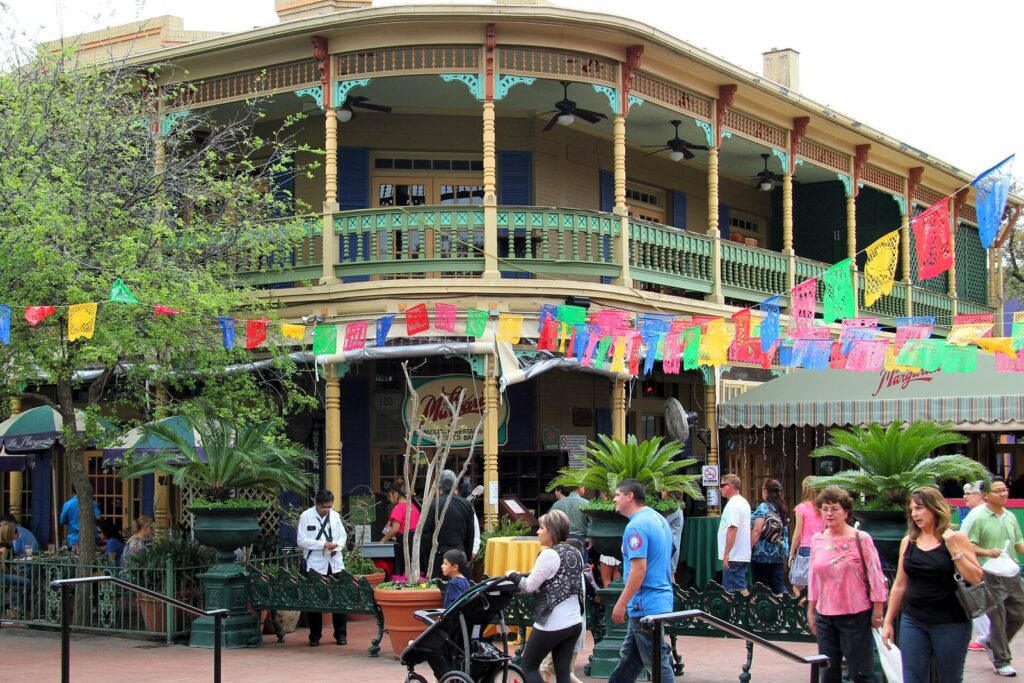
Two landmarks help you get your bearings. Mi Tierra Café y Panadería, the bakery and restaurant that has anchored the square since 1941, sits on Produce Row, with La Margarita along the same street. And the Centro de Artes gallery stands at the square’s edge on Santa Rosa Avenue. Under the I-35 overpass between Dolorosa and Commerce, The Pass at Market Square is a recreation area, a reminder that the freeway runs right past the west side of the market.
When is it open, and how do you get there?
The City lists Market Square’s hours as 10 a.m. to 6 p.m. Monday through Sunday. The market closes on Thanksgiving, Thursday, November 26, 2026, and on Christmas Day, Friday, December 25, 2026; its events page lists the other holiday closures and notes that event dates and times can change. Restaurants keep their own hours, which can run later (see the food section below).
On foot: from Alamo Plaza it’s about 0.9 miles, roughly 19 minutes, west through downtown. From Casa Rio on the River Walk, it’s about 0.8 miles, around 17 minutes. That makes it an easy pairing with the River Walk and Main Plaza, though in summer you’ll want to make the walk before noon. Our River Walk map shows the nearest river exits.
By car: it’s about 1.4 miles from the Alamo, a four-minute drive in light traffic. The Market Square Lot is at 612 W. Commerce St., and the market’s parking page also points to nearby garages, surface lots and metered street parking; most meters take cards and the City’s SAPark app. Check the City’s SAPark map for current rates, arrive early on weekends and event days, and expect the lot to close for big events, as it did during Fiesta in April 2026.
By bus: VIA buses serve the west side of downtown; plug “Market Square” into VIA’s trip planner for the route from your hotel. Our guide to getting around San Antonio covers fares and passes.
Plan it: 514 W. Commerce St.; free; 10 a.m. to 6 p.m. daily; closed on major holidays including Thanksgiving and Christmas Day; allow two hours with a meal.
A two-hour loop through the shops
The square is compact enough that you can’t get lost, but it’s easy to spend your time and money in the first three shops. This loop keeps you moving and leaves the buying for the end.
- Start in El Mercado (30 to 40 minutes). Walk the whole indoor market once without buying. You’ll notice the same items turning up in several shops, which tells you what’s mass-produced and what’s rarer.
- Cross the plaza (15 minutes). Check who’s working in the outdoor stalls. The market’s own site says artisans set up along the plazas and demonstrate their crafts: pottery, paintings, leather goods, candles, jewelry and portraits. This is where you’re most likely to meet the person who made the thing you’re holding.
- Do the Farmer’s Market building (30 minutes). More shops, a slightly different mix, and the food court for a break.
- Eat (30 to 45 minutes). Mi Tierra for the full show, La Margarita for a margarita on the patio, or the food court for something quick.
- Go back and buy. Now you know what’s common, what’s special and what it costs in three different shops.
- Finish at the Centro de Artes (20 minutes), if it’s open, for a free look at what contemporary artists make of the same market culture.
On a weekend, time the loop so you’re in the plazas in the afternoon, when the stage is most likely to have music and dancing.
What to buy at Market Square, shop by shop type
The market’s directory lists dozens of shops by name, and the names tell you a lot. These are the categories worth your time, with the shops whose names make their specialty plain:
| Type of shop | Look for | Examples from the directory | Buying tip |
|---|---|---|---|
| Silver and jewelry | Rings, cuffs, earrings | Silver Twins, Magalis Silver International, Jesse’s Jewelry | Look for a .925 stamp on anything sold as sterling, and ask what the piece is if there’s no stamp. |
| Leather | Belts, wallets, bags | JB Leather, Leather Creations | Smell it and check the edges and stitching; real leather has uneven grain. |
| Imports and folk art | Pottery, painted wood, textiles, papel picado, piñatas | Little Mexico Imports, Old Mexico Imports, La Morenita Imports, Mi Pueblito Arts & Crafts, Unlimited Handicrafts | Ask where a piece was made and by whom; a shop that knows is a good sign. |
| Art and prints | Framed and unframed prints | Boone’s Fine Prints | Prints travel flat and light, which makes them the easiest good souvenir to fly home with. |
| Snacks and sweets | Candy, chips, drinks | Munchies, Snack Bar | Good for a quick sugar fix between buildings. |
How to tell handmade from mass-produced
The souvenir you’re likeliest to regret is the one you bought in the first five minutes. Three habits help. First, compare before you buy: if you see the identical item, in the identical color, in four shops, it was made in quantity. Second, look for variation: hand-painted pottery has brushstrokes that differ from piece to piece, and handmade textiles have small irregularities. Third, ask questions. A seller who can tell you which town or workshop a piece came from usually knows the stock; one who can’t may be reselling whatever arrived in the last box.
The plazas’ working artisans make this easier, since you can watch the leatherwork or the painting happen. If a piece matters to you, buy it there.
Paying, carrying and getting it home
Carry some cash for the small stalls and ask before you assume a card will work. If you’re buying several pieces in one shop, it’s fair to ask politely whether there’s a better price, and to take the answer with good grace. For pottery and glass, ask the shop to wrap it well, and plan on carrying fragile pieces in your cabin bag. Papel picado, prints and textiles are the easy wins: light, flat and hard to break.
For gifts that are actually made in San Antonio rather than imported, the outdoor artisans are your best bet here, and our broader shopping guide covers the city’s makers and markets.
Where to eat at Market Square
Eating is half the reason to come, and the options run from a full sit-down meal to a quick plate in the food court.
| Place | What it is | Go for | Hours |
|---|---|---|---|
| Mi Tierra Café y Panadería | Restaurant and bakery, on the square since 1941 | Tex-Mex plates, pan dulce and the decor | 8 a.m. to 10 p.m. Sunday to Thursday, to 11 p.m. Friday and Saturday |
| La Margarita Restaurant & Oyster Bar | Restaurant with a patio on the plaza | Margaritas and a weekend brunch buffet | Check its site; the brunch buffet runs Saturday and Sunday, 10 a.m. to 2 p.m. |
| Farmer’s Market food court | Angie’s, Boone’s Cafe, Bruno’s Pizzeria, Que Lindo es Jalisco, Ranchero Grill & Tap and Vero’s Cafe | A cheap, fast lunch | Kitchens may close at 5 p.m. |
| Munchies and Snack Bar | Snack counters in El Mercado | Something to keep you going | Market hours |
Mi Tierra Café y Panadería
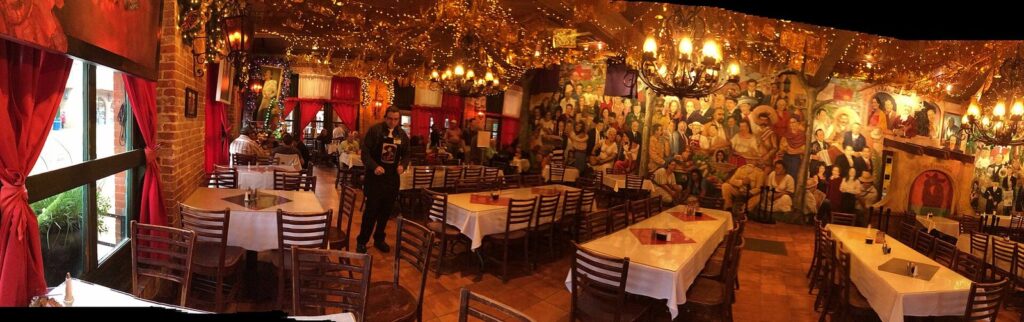
Mi Tierra is the reason many people come to Market Square at all. The Cortez family restaurant dates itself to 1941 and calls itself a landmark alongside the Alamo and the River Walk, and the room lives up to it: the market’s site describes Christmas lights up all year and strolling mariachis. Go for a Tex-Mex plate, then stop at the bakery counter on the way out for pan dulce to take back to the hotel. Older guidebooks call Mi Tierra a round-the-clock restaurant, but its own site lists 8 a.m. to 10 p.m. Sunday through Thursday and 8 a.m. to 11 p.m. on Friday and Saturday, so check before a late visit.
Plan it: 218 Produce Row; opens 8 a.m. daily; to avoid a wait, go outside the usual lunch and dinner rush.
La Margarita and the food court
La Margarita Restaurant & Oyster Bar, next door, is the patio choice, with a weekend brunch buffet on Saturdays and Sundays from 10 a.m. to 2 p.m. For something faster and cheaper, the food court inside the Farmer’s Market building has six kitchens, from Jalisco-style plates to pizza; the market warns that its kitchens may close at 5 p.m., so don’t leave a late lunch too late. On event weekends, food booths in the plazas add tamales and more.
For more of the city’s Mexican and Tex-Mex cooking, see our San Antonio food guide.
What else is worth seeing nearby?
Centro de Artes Gallery
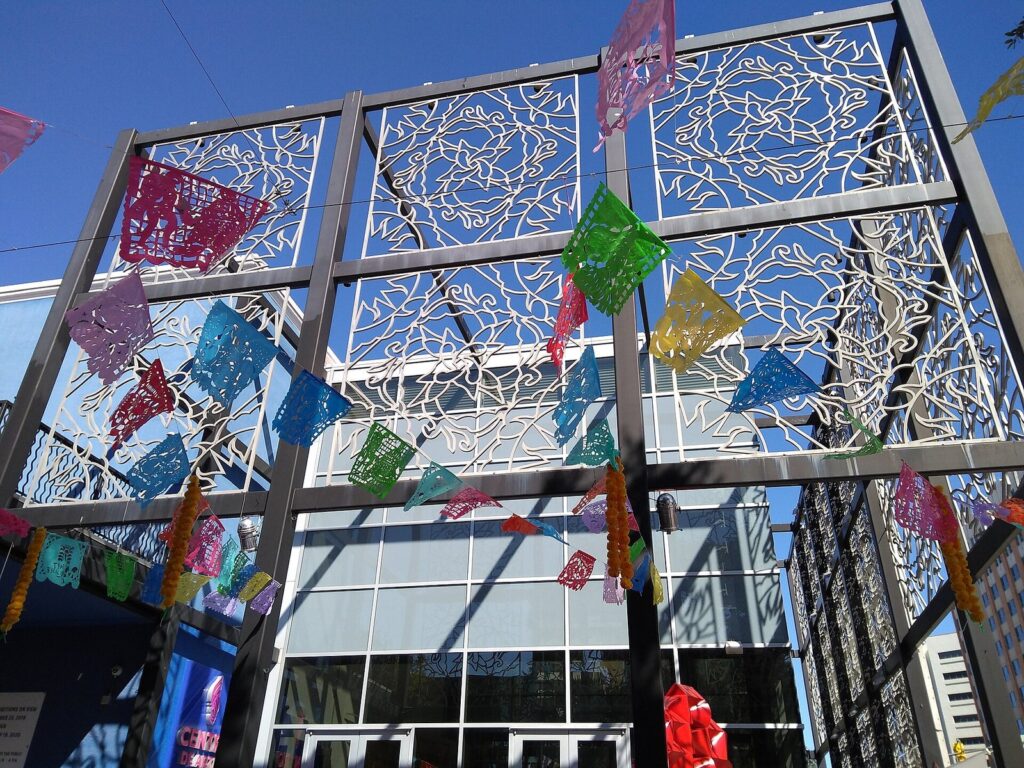
The City’s Centro de Artes, at 101 S. Santa Rosa Ave. on the edge of the square, is a free gallery that’s worth 20 minutes even if you don’t think of yourself as a gallery person. Its exhibition Mercado/Material, on view from October 15, 2026 to March 7, 2027, brings together more than a dozen contemporary artists who rework the stuff of the market itself: piñatas, market signs and grocery goods. After two hours of shopping, it’s a sharp way to see the place differently.
Plan it: free; Wednesday to Friday 10:30 a.m. to 5 p.m., Saturday and Sunday noon to 5 p.m.; closed Monday, Tuesday and City holidays.
Spanish Governor’s Palace and San Fernando Cathedral
Two of downtown’s oldest sites are a short walk east. The Spanish Governor’s Palace is about 0.27 miles from the square, roughly six minutes on foot, and San Fernando Cathedral on Main Plaza is about four minutes beyond it. The palace, run by the City’s World Heritage Office, opens Tuesday through Saturday from 9 a.m. to 5 p.m. and Sunday from 10 a.m. to 5 p.m., closed Mondays, with admission of $6 for adults, $4 for seniors 60 and over and military with ID, $3 for ages 7 to 13, and free under 7. The cathedral is an active parish, so check its website for visiting and Mass times before you go. Our guide to San Antonio’s culture and history puts both in context.
A short history of Market Square
The market’s own history page, which draws on a 1988 study, traces the plaza to a gift from the King of Spain in 1730. It also recalls the chili queens, women who sold chili at night from lantern-lit stalls and whom the writer O. Henry put into print. The market moved to its present site from Plaza de Armas in the 1890s.
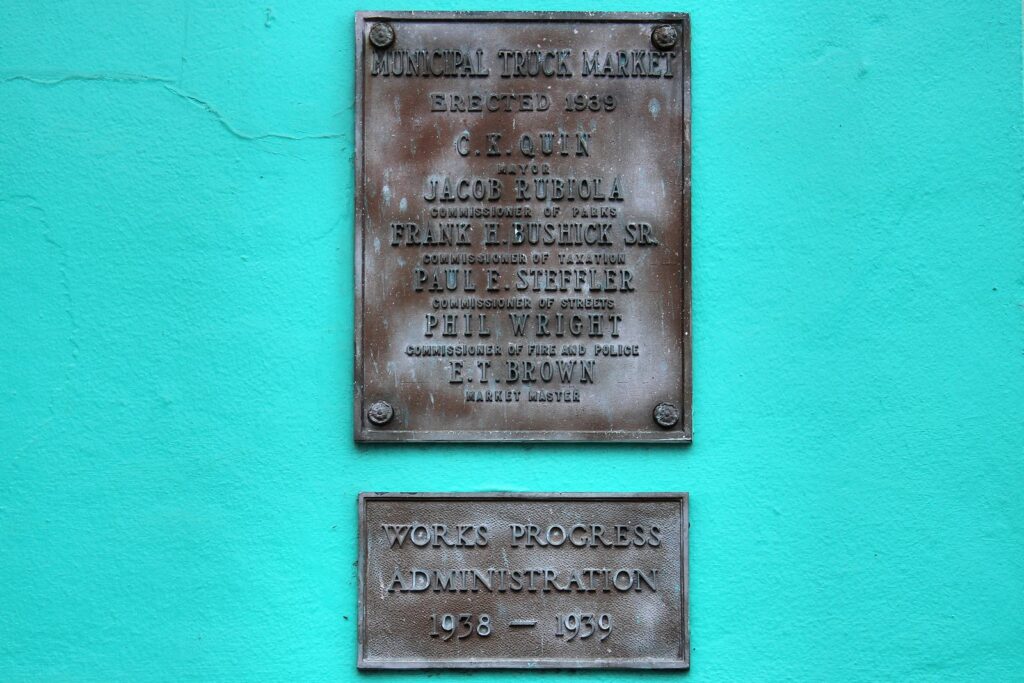
Change came with World War II, when the produce wholesalers moved out to the Terminal Market on Zarzamora Street and the square’s street life faded. In the 1960s a market committee led by the architect Boone Powell set about reviving it, and by 1976 the three blocks bounded by Dolorosa, Santa Rosa and West Commerce had become pedestrian malls. Bronze plaques on one of the buildings record the Municipal Truck Market, erected in 1939, and the Works Progress Administration, 1938 to 1939, a small piece of New Deal history among the souvenir stalls. The history also records that Pete Cortez, whose café became Mi Tierra, rented space from Francesco “Don Pancho” Pizzini. Today it remains one of the city’s main stages for Mexican American culture, and the market’s history notes that the square still fills for Cinco de Mayo and Día de los Muertos.
Events and the holiday season at Market Square
Market Square is at its best with music on. The market says its plaza and Farmer’s Market stage host live music and dancing almost every Saturday and Sunday, and all of its events are free. The 2026 calendar for the rest of the year includes:
- Market Square Weekends, with live performances, local food and art: Sunday, November 22; Friday, November 27; Sunday, November 29; Saturday, December 5; Sunday, December 6; and Saturday, December 19, each 10 a.m. to 6 p.m.
- Celebración Musical: Saturday, November 28.
- Gran Tamalada: Saturday, December 12 and Sunday, December 13, from 10 a.m., the square’s tamale weekend.
The market is closed on Thanksgiving and Christmas Day. For later December dates and the 2027 festivals, including Cinco de Mayo and Día de los Muertos, check the events page on the market’s own site. Our San Antonio events guide covers the citywide calendar.
A half-day downtown walk built around Market Square
Market Square sits at the west end of the oldest part of the city, so it’s easy to fold into a morning on foot. This route links the Alamo, the cathedral, the Spanish Governor’s Palace and the market, with lunch at the end. The walking times come from route-planner estimates; add time for stops and shade breaks.
| Time | Stop | Walk from the previous stop |
|---|---|---|
| 9:30 a.m. | Alamo Plaza | Start here |
| 9:45 a.m. | San Fernando Cathedral, Main Plaza | About 0.6 miles, 13 minutes |
| 10:15 a.m. | Spanish Governor’s Palace | About 0.2 miles, 4 minutes |
| 11:00 a.m. | Market Square, El Mercado first | About 0.27 miles, 6 minutes |
| 12:30 p.m. | Lunch at Mi Tierra or the food court | On the square |
| 1:30 p.m. | Centro de Artes | At the square’s edge |
| 2:00 p.m. | Back to the River Walk at Casa Rio | About 0.8 miles, 17 minutes |
The route works best from Wednesday to Saturday: the Governor’s Palace is closed on Mondays and the Centro de Artes on Mondays and Tuesdays, and on Sundays the palace opens at 10 a.m. In summer, start an hour earlier and keep the outdoor stretches short; the indoor market buildings give you shade at midday. Bring a tote bag for purchases and water for the walk, and wear shoes you can stand in for a few hours on brick.
When is the best time to visit?
For shopping, go on a weekday at opening time. The aisles are quiet, the shopkeepers have time to talk, and you can browse without the weekend crowd. For atmosphere, go on a weekend afternoon, when the music starts, the plazas fill and the food booths come out on event days.
Season matters too. San Antonio’s average highs run 92 to 96°F from June through August on NOAA’s 1991–2020 normals, so in summer do the outdoor plazas first thing and retreat into El Mercado and the Farmer’s Market building as the day heats up. From November through March the plazas are pleasant all day, and the December tamale weekend is one of the most enjoyable times to be there.
Is Market Square worth it?
Yes, with the right expectations. Go for the color, the music, a meal at Mi Tierra and an hour of browsing, and you’ll have a good time. Go expecting a curated market of local makers, and you’ll be disappointed by how many shops sell the same imports. The trick is to treat El Mercado as a place to look and the artisans’ stalls as the place to buy.
It pairs naturally with the rest of the old city: San Fernando Cathedral, the Spanish Governor’s Palace and the River Walk are all within a 20-minute walk. If you’re building a first day, our first-timer’s guide to San Antonio shows where it fits. And for the city’s other places to shop, from the River Walk to the Pearl, head back to our overview of shopping in San Antonio.
Market Square FAQ
Is Market Square free to visit?
Yes. There’s no admission charge to walk the plazas, browse El Mercado and the Farmer’s Market building, or see the weekend music, and the market says all of its events are free. You pay only for what you buy, what you eat and where you park. The Centro de Artes gallery at the edge of the square is free as well.
Is Mi Tierra still open 24 hours?
Not according to its own site. Mi Tierra Café y Panadería was known for decades as a round-the-clock restaurant, but the restaurant now lists 8 a.m. to 10 p.m. Sunday through Thursday and 8 a.m. to 11 p.m. on Friday and Saturday. It still opens earlier and closes later than the market’s shops, which keep 10 a.m. to 6 p.m.
Is Market Square the same as El Mercado?
Mostly, in everyday use. El Mercado is the indoor market mall at the heart of the square, and many people use the name for the whole place. Historic Market Square is the official name for all three blocks: El Mercado, the Farmer’s Market building, the plazas, the restaurants and the gallery.
What is the best thing to buy at Market Square?
For most visitors, something from one of the working artisans in the plazas, where you can meet the maker. Among the easy souvenirs, papel picado and prints are light, flat and hard to break, which makes them ideal for flying home. Silver is worth buying if you check for a .925 stamp and compare a few shops first.
How long do you need at Market Square?
Plan on about two hours for a proper browse of both market buildings and the plazas plus a meal, or an hour if you only want to walk through and see the place. Add 20 minutes for the Centro de Artes gallery, and longer on a weekend afternoon if you want to stay for the music on the stage.
Where do you park for Market Square?
The Market Square Lot is at 612 W. Commerce St., and there are garages, surface lots and metered street spaces nearby. Most meters take cards and the City’s SAPark app; check the City’s SAPark map for current rates. On weekends and event days, arrive early, since the lot can fill or close for big events.
Related San Antonio Guides
- Shopping in San Antonio: Market Square, the River Walk, the Pearl, hats and boots, and the malls.
- San Antonio Food Guide: Tex-Mex, barbecue, pan dulce and where to eat beyond Market Square.
- San Antonio Culture and History: the Spanish, Mexican and Tejano city around the square.
- San Antonio on a Budget: free sights and cheap eats, Market Square included.
- Getting Around San Antonio: walking, VIA buses and parking downtown.
Sources and How We Checked
We checked this guide on November 19, 2026 against the operators and agencies listed below rather than other travel lists. It is compiled from those sources and does not claim first-hand visits.
- City of San Antonio: Market Square, Centro de Artes exhibitions
- Historic Market Square: Explore and shop, Shop directory, Eat and drink, Events, History, Parking
- Mi Tierra Café y Panadería: La Familia Cortez
- Spanish Governor’s Palace: spanishgovernorspalace.org
- San Fernando Cathedral: Hours and directions
- NOAA National Centers for Environmental Information: 1991–2020 monthly normals, San Antonio airport
- Walking and driving times: OpenStreetMap routing
San Antonio Tourism Guide is an independent publication. We are not affiliated with Visit San Antonio, the City of San Antonio, the Alamo or any attraction listed here, and no one paid to be included.
Photo Credits
- El Mercado plaza at Market Square: photo by Michael Barera, Wikimedia Commons (CC BY-SA 4.0)
- Arcade at El Mercado: photo by Larry D. Moore, Wikimedia Commons (CC BY 4.0)
- Papel picado at Market Square: photo by H. Michael Karshis, Wikimedia Commons (CC BY 2.0)
- Mi Tierra dining room: photo by Robert Gray, Wikimedia Commons (CC BY 2.0)
- La Margarita at Market Square: photo by Larry D. Moore, Wikimedia Commons (CC BY 4.0)
- Centro de Artes gallery: photo by Adrianna Chavez, Wikimedia Commons (CC BY-SA 4.0)
- Municipal Truck Market plaques: photo by Larry D. Moore, Wikimedia Commons (CC BY 4.0)